Restaurant Waste Management: A Practical Guide For High-Volume Restaurants
Restaurant waste management covers trash, cardboard, food scraps, recycling, and pickup logistics. It helps restaurants reduce waste volume, control hauling costs, improve sanitation, and keep materials out of landfills. At Bay Area Trash Compactor, we exist to keep waste out of landfills while helping businesses run more efficiently.
For a busy restaurant, waste can become expensive long before the invoice arrives. Overflowing bins, frequent pickups, and staff time spent breaking down boxes all add pressure. The right equipment creates a smoother path from kitchen waste to collection.
Why Restaurant Waste Is A Cost Problem Not Just A Trash Problem
Restaurant waste becomes a cost problem when collection needs outpace the business. Each extra pickup, overflowing bin, and labor-heavy cleanup adds to operating expenses. A stronger restaurant waste management plan can reduce those costs without slowing down service.
Hauling fees can climb when a restaurant relies on frequent front load bin pickups. Those bins fill quickly when loose bags, cardboard, and food waste take up unnecessary space. Compaction changes that equation by reducing the volume before the waste hauler arrives.
Bay Area Trash Compactor has seen restaurants lower hauling costs by 35 to 75 percent through better waste equipment. Reducing unnecessary waste truck trips can also cut carbon-emitting emissions by 60 to 80 percent. Those numbers matter when a business is watching every operating expense.
A trash enclosure should support the restaurant, not become another problem to manage. When bins overflow, employees lose time handling waste instead of serving guests. It can also leave a bad impression on delivery drivers and neighboring businesses.
Our work across Northern and Southern California focuses on systems that fit real operations. We help restaurants in Walnut Creek, Concord, Pleasanton, San Ramon, and beyond. Each site has its own waste volume, service schedule, and available space.
The Three Waste Streams Every Restaurant Needs A Plan For
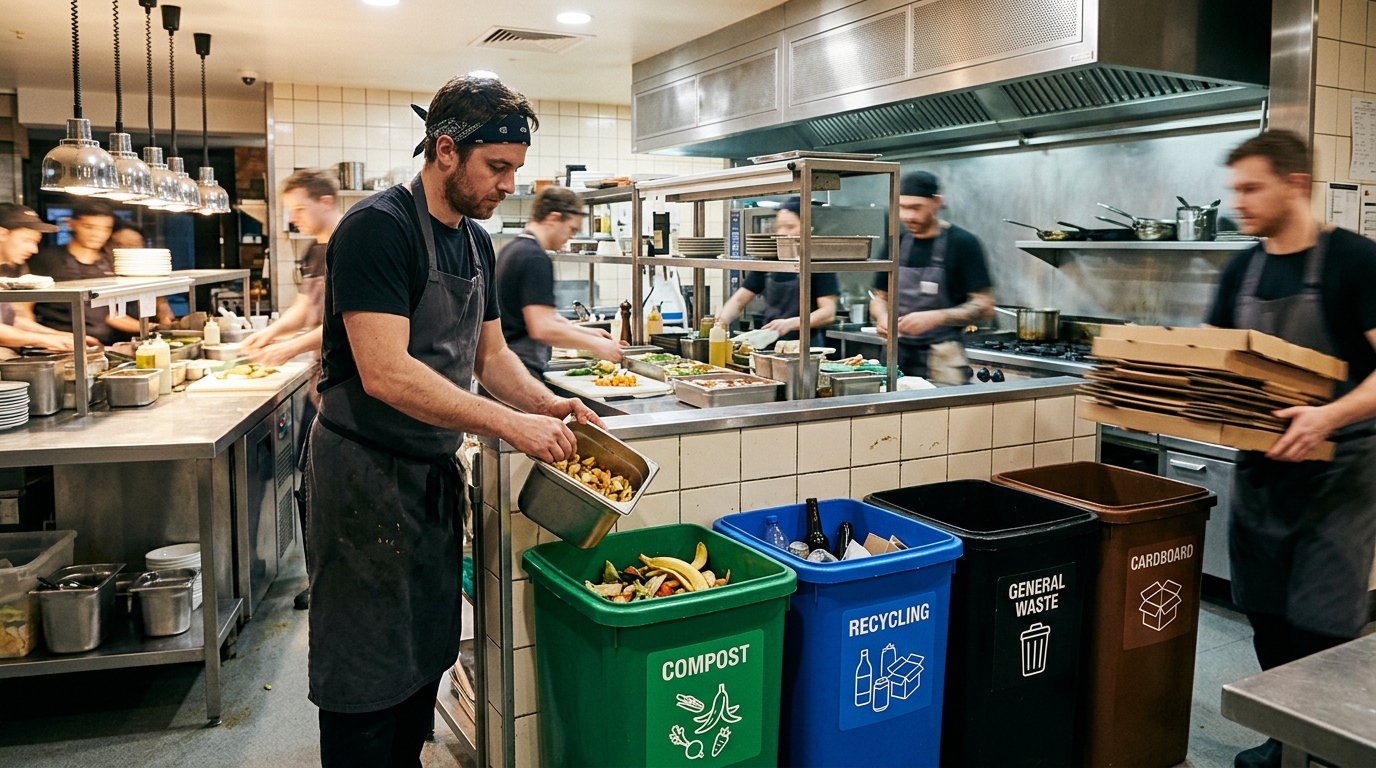
High-volume restaurants need separate plans for trash, cardboard, and organics. Each stream has different handling needs, collection costs, and opportunities for improvement. Treating all waste as one pile often creates more work and more expense.
A good restaurant waste management plan starts by watching what enters the disposal area. Look at the bags coming from the kitchen, deliveries arriving daily, and food that never reaches a guest. Those details show where equipment can make the biggest difference.
Trash Compaction Means Fewer Pickups
Trash compaction reduces the space garbage occupies before the waste hauler arrives. A restaurant trash compactor can turn loose bags into dense, manageable loads. That allows many restaurants to reduce pickup frequency without creating overflow.
Compaction ratio describes how much waste volume equipment can reduce under pressure. The exact result depends on the waste stream, bag density, and the compactor model. In practical terms, fewer loose bags often mean fewer collection days.
A commercial compactor for restaurants can work especially well behind fast-casual locations and busy drive-thrus. Those properties often generate steady waste throughout breakfast, lunch, and dinner. Keeping trash contained helps the disposal area stay more manageable.
We install equipment based on how the restaurant operates every day. A compact unit may work well in a tight enclosure. A larger system can support locations with heavier volume and more frequent deliveries.
Cardboard Baling Instead Of Flattening Boxes By Hand
Cardboard balers compress boxes into dense bundles for easier recycling collection. They save staff from spending long stretches flattening boxes behind the building. A baler can also reduce the number of recycling containers needed near the loading area.
Delivery boxes can become a nuisance fast during a busy shift. Employees may stack them against walls or leave them near receiving doors. Before long, the back-of-house area starts feeling like a cardboard fort.
A baler helps restaurants reclaim space and manage recycling more efficiently. It keeps cardboard together in a compact form that is easier to store. That can also improve the property’s diversion rate by separating recyclable material from trash.
Our guide on baler vs compactor explains how each machine serves a different waste stream. Some restaurants need both equipment types to handle their daily material flow. The best setup depends on what arrives and what leaves the site.
Food Waste Composters And Dehydrators
Food composters and dehydrators reduce the impact of food scraps after preparation or service. They can support organics recycling by reducing material volume and handling moisture-heavy waste. Those systems work best when staff have simple sorting routines.
Food waste can include prep scraps, spoiled ingredients, and uneaten food from service. It adds weight to collection containers and can create odors near waste areas. Managing organics separately can reduce the amount sent to landfill.
A food waste dehydrator removes moisture from food scraps to reduce their weight and volume. This can make on-site food waste handling less demanding for high-volume kitchens. It also helps reduce the mess associated with wet organic material.
Restaurants can also explore food composters for an on-site organics solution. Composting equipment helps turn food scraps into a more manageable output. The right option depends on local collection rules and kitchen waste volume.
How Consolidating Pickups Changes The Math
Consolidating pickups means collecting more compacted material during fewer visits. That can lower hauling charges, reduce truck traffic, and simplify waste scheduling. It is one of the most direct ways restaurants can control garbage costs.
A front load bin can fill quickly when loose trash bags are thrown inside. Compaction allows more material to fit into the same available space. That means the restaurant may not need daily service for waste that once required it.
Reducing pickups can also reduce disruption around restaurant entrances and drive-thru lanes. Garbage trucks take up space, create noise, and can complicate delivery windows. Fewer trips make those service areas easier to manage.
The environmental benefit is also worth noting. Waste haulers burn fuel traveling to the restaurant and then to disposal facilities. Reducing those trips can lower emissions while supporting broader sustainability goals.
A restaurant waste management review can identify where pickup schedules no longer match actual need. Some businesses are paying for collection based on old habits rather than current waste volume. Equipment changes can help create a schedule that makes better financial sense.
Real Results Amy's Drive-Thru Corte Madera
Amy’s Drive-Thru Corte Madera cut trash pickups from six days per week to three. The restaurant saved tens of thousands of dollars per year through a better waste equipment setup. That result came from matching the equipment to a high-volume restaurant’s needs.
Our team placed a 700ss Power Packer Compactor for landfill trash at the location. The unit compacts 20 to 25 large trash bags into a manageable trash cube. Staff transport the cube into the local hauler’s 1.5-yard rear-load bin.
The compactor reduced trips across the drive-thru lane to once or twice daily. It also helped Amy’s reduce pickup days from six per week to three. Less traffic around the enclosure gave staff a more workable routine.
For cardboard, we installed a Bramidan B-5 baler with a small footprint. The baler crushes 150 boxes into an easy-to-handle bale weighing 185 to 200 pounds. Staff no longer needed several cardboard recycling bins or hours flattening boxes.
You can read more about fast food restaurant success stories like this project. Restaurants that handle large daily volumes can often find similar opportunities. The key is looking at the waste stream before selecting equipment.
What California's SB 1383 Means For Your Restaurant
SB 1383 requires California businesses to separate organic waste from trash. It also supports statewide organics recycling and edible food recovery efforts. Restaurant owners should understand local requirements and work with their local jurisdiction.
CalRecycle explains that jurisdictions must provide organics collection service to businesses and residents. State rules also support efforts to keep organic materials out of landfills. Local requirements may vary based on city programs and business type.
Restaurants should provide appropriate containers and help staff understand sorting expectations. Food scraps, recyclable material, and landfill trash should go into the correct collection stream. Contamination can make recycling and organics programs harder to manage.
Food recovery is another part of the conversation for certain larger food generators. SB 1383 includes edible food recovery requirements for covered businesses. CalRecycle states that California aims to recover 20 percent of edible food otherwise sent to landfills by 2025.
This information is general and should not be treated as legal advice. Restaurant operators should confirm the local requirements that apply to their location. We can help evaluate equipment that supports a practical solid waste management setup.
What Size Compactor Fits Your Restaurant?
The right compactor size depends on waste volume, available space, and pickup frequency. A smaller unit may fit a compact restaurant enclosure, while larger sites need more capacity. Proper sizing helps avoid paying for equipment that does not match the workload.
Restaurants should start by reviewing how many bags they generate during normal service. Delivery volume, dining capacity, and menu type can all affect that amount. A high-volume location with daily waste needs different equipment than a small café.
The waste enclosure also matters when selecting a compactor. Equipment needs adequate access for loading, service, and hauler collection. Our team reviews the site before recommending a model or layout.
Our page on commercial trash compactor sizes can help restaurant operators understand key sizing factors. A site review gives a more accurate picture of what works. Good equipment should fit the business rather than force employees into awkward routines.
Full-service dining locations often have different needs from fast-food sites. Kitchen waste, cardboard volume, and operating hours can all shape the equipment recommendation. Our experience with full service restaurants helps us plan around those day-to-day demands.
FAQs About Restaurant Waste Management
Ready To Cut Your Garbage Bill Here's How To Get Started
We can assess your waste stream, available space, and collection schedule to recommend practical equipment. Call Bay Area Trash Compactor at (925) 465-5133 or contact our team to start building a more efficient restaurant waste system.