
Commercial Cardboard Baler Solutions That Put Boxes In Their Place
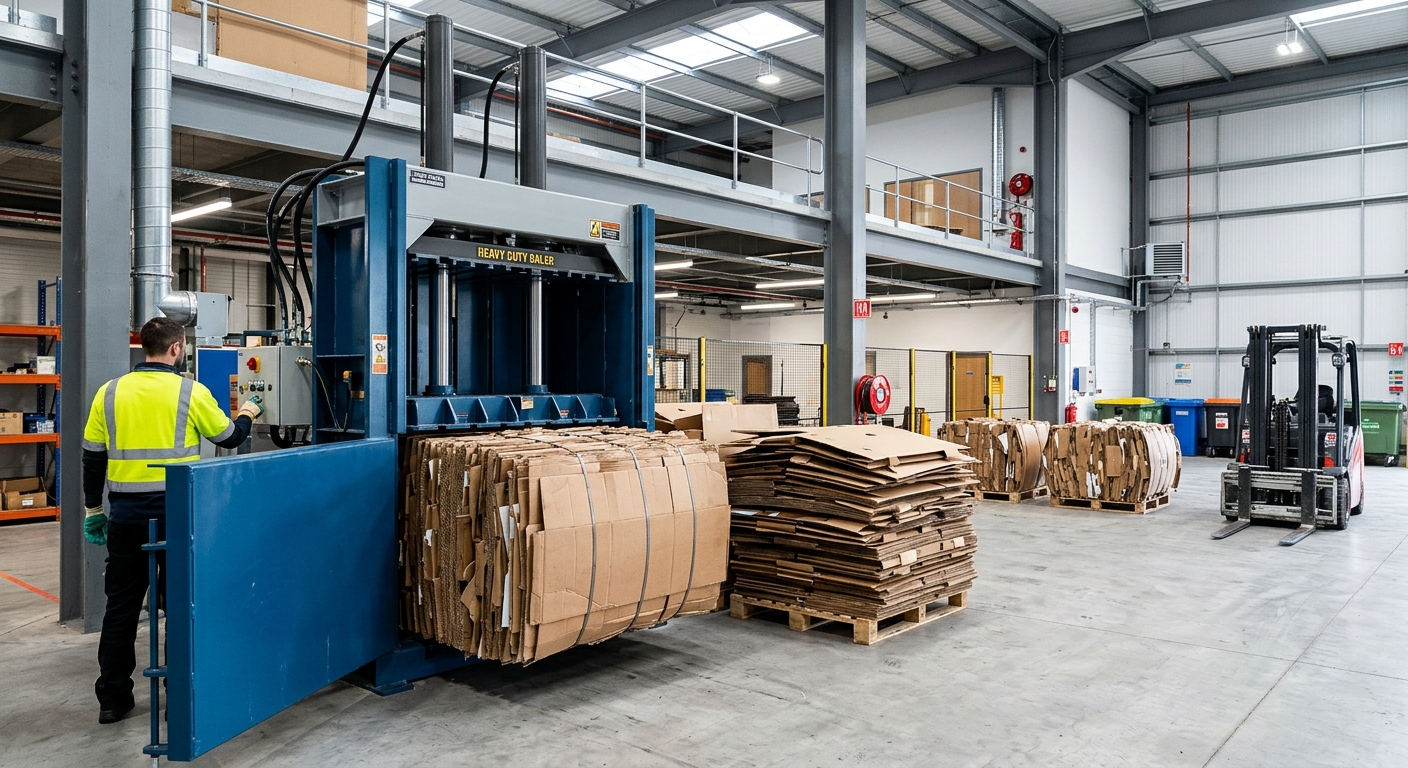
A commercial cardboard baler compresses delivery boxes into secured bundles that are easier to store for recycling collection. The right equipment helps employees manage incoming cardboard without letting loose boxes take over the receiving area. At Bay Area Trash Compactor, we help keep recyclable materials out of landfills while making business operations run more efficiently.
When A Commercial Cardboard Baler Makes Sense
A commercial cardboard baler deserves consideration when cardboard repeatedly interrupts work rather than remaining a manageable recycling task. Boxes that block storage shelves or require repeated handling can signal that your existing routine needs attention.
Start by watching what happens after employees unpack an ordinary delivery. If empty boxes remain beside the receiving door until someone finds time, the problem begins before collection.
Employees may move those boxes several times before they finally reach the recycling container. That repeated handling consumes time without improving the material’s condition or making it easier to collect.
A baler gives suitable cardboard a defined destination during the receiving process. Its value depends on how well that destination fits the work already happening onsite.
Follow The Boxes From Delivery To Collection
Before recommending a commercial cardboard baler, we need to understand how cardboard moves through your property. The best installation location often becomes apparent when you follow that route.
Watch where employees open boxes and where they place the packaging afterward. A machine near receiving can reduce unnecessary movement when most cardboard originates at that location.
Some businesses unpack deliveries across several departments rather than at one central point. Those properties need a collection routine that brings suitable material together without creating another handling problem.
Consider when deliveries arrive in relation to other work happening nearby. A receiving area that feels spacious before opening may become crowded once employees begin moving inventory.
The equipment should support these routines rather than depend on an empty room. A practical layout works when your employees need it during normal business activity.
Count Cardboard Volume Before Comparing Machines
The right commercial cardboard baler depends on actual cardboard output rather than the size of your building alone. Two businesses with similar floor space can receive very different amounts of packaging.
Track delivery boxes during a representative period that includes your busiest days. Note how often recycling containers fill before scheduled collection and where extra cardboard waits.
Box dimensions matter alongside the number of deliveries your property receives. Bulky cartons can require more preparation than smaller boxes that fit through the machine’s loading opening.
Record how employees handle cardboard now so you can identify the tasks equipment might change. Time spent clearing overflowing stacks deserves attention alongside the cost of collection.
These observations create a stronger starting point than estimating from memory. They also help avoid purchasing capacity your business cannot use or equipment that fills too quickly.
Match The Baler To Your Available Space
A commercial cardboard baler needs more room than its closed dimensions suggest. Employees require access for loading and enough clearance to remove completed bales safely.
Door movement can affect where equipment fits inside a crowded stockroom. The installation plan should account for the machine’s operating position rather than its storage footprint alone.
Ceiling height and the delivery route also need review before equipment arrives. A suitable location is not useful if the machine cannot reach it.
Electrical requirements vary by model, so existing power should never be assumed sufficient. Confirm the manufacturer’s requirements and arrange qualified electrical work when the proposed installation needs changes.
We also consider where completed bales will wait before recycling collection. Equipment cannot solve a space problem if finished material immediately blocks the same doorway.
Understand Bale Weight Before Installation
A commercial cardboard baler produces bundles that require a suitable handling method after they leave the machine. Heavier bales can improve storage efficiency while introducing different movement requirements.
Your recycling partner should confirm acceptable bale specifications before you select equipment. Its collection arrangement may influence which machine makes practical sense for your business.
For example, our M48HD specification sheet lists cardboard bale weights reaching up to 750 pounds. That maximum describes model capability rather than the guaranteed weight of every completed bale.
Actual results depend on the material being processed and how employees operate the equipment. A machine’s published maximum should not become your entire purchasing decision.
Discuss bale removal and storage with the people responsible for those tasks. Their available handling equipment needs to match the system you plan to install.
Keep Food And Moisture Away From Recycling
A commercial cardboard baler works best when employees load materials approved for that specific machine. Food waste and liquids should remain outside a cardboard recycling process.
Receiving areas near kitchens need particular attention because different waste streams meet there. A delivery carton can become contaminated if employees use it to collect food scraps.
Keep suitable cardboard separate from wet packaging before it reaches the loading point. Your recycling provider should explain which materials it accepts and which conditions make cardboard unsuitable.
Plastic film also needs confirmation before anyone adds it to the chamber. Some machines can process approved film, but equipment capability does not guarantee acceptance by your collector.
Clear instructions help employees avoid mixing materials because they look similar. The objective is usable recycling output rather than a dense bundle containing whatever fits.
Compare Operating Costs With Current Handling
A commercial cardboard baler should offer practical value against the cost of your existing arrangement. Purchase price matters, though it does not describe the complete investment.
Include installation expenses when comparing equipment options for your property. Site preparation or electrical work can change what you spend before the machine becomes operational.
Ongoing service and required consumables also belong in the financial estimate. Ask which supplies the selected model uses and how operating workload affects maintenance needs.
Compare these expenses with realistic changes in employee handling time and collection charges. Avoid counting savings that your service agreement does not actually allow.
Recycling income should remain a confirmed opportunity rather than an assumed payment. Commodity conditions and local collection arrangements influence what recovered material is worth.
Build A Loading Routine Employees Can Follow
A commercial cardboard baler becomes useful when employees understand how it fits into their daily responsibilities. Training should address approved materials and the manufacturer’s operating procedures.
Place instructions where authorized employees can consult them without leaving the loading area. Equipment-specific guidance matters more than general advice copied from another machine’s manual.
Employees should know who handles bale completion and removal during each shift. Undefined responsibility can leave a full machine waiting while loose boxes begin accumulating again.
Never allow workers to bypass safety devices or reach into machinery. Qualified personnel must follow applicable isolation procedures before servicing equipment or addressing hazardous jams.
A dependable routine includes reporting unusual sounds or changes in machine operation. Prompt reporting helps the service team understand the issue before employees develop unsafe workarounds.
Plan Service Around The Machine’s Workload
Regular maintenance helps a commercial cardboard baler remain available when delivery activity reaches its busiest point. A shutdown can quickly return employees to stacking boxes around the receiving area.
Follow manufacturer guidance when planning inspections and required servicing for your equipment. Operating conditions also matter when qualified technicians assess how frequently the machine needs attention.
Our maintenance program helps businesses plan equipment care around actual use. Scheduled attention provides opportunities to identify wear before it causes a larger interruption.
Our equipment service supports systems that begin showing performance problems or require professional evaluation. Accurate information from employees helps explain when the problem started and how operation changed.
Keep the surrounding area accessible so technicians can inspect equipment without unnecessary delays. Stored merchandise should not block the access needed for safe maintenance work.
Evaluate Results After Installation
A commercial cardboard baler should improve the routine it was purchased to support. Reviewing results helps management see what changed and where employees still encounter problems.
Ask receiving staff if cardboard now reaches its destination with less handling. Their feedback can explain improvements that are difficult to measure through collection invoices alone.
Check how completed bales move through storage before the recycling provider arrives. A loading process can work well while the finished-material route still needs attention.
Compare collection arrangements with actual output after the system becomes established. Changes should reflect observed conditions rather than assumptions made before anyone used the machine.
Our news section offers additional information about commercial waste equipment and material handling. These resources can support conversations between property managers and the teams handling cardboard daily.
FAQs
Give Every Delivery A Cleaner Finish
Contact Bay Area Trash Compactor to discuss a commercial cardboard baler that fits your property. Call (925) 465-5133 to request an equipment review based on your actual cardboard volume.