Cardboard Baler Buyer’s Guide For Businesses
A cardboard baler compresses boxes into dense, stackable bales for recycling. It helps businesses control cardboard buildup, reduce bin needs, save labor, and improve recycling operations. At Bay Area Trash Compactor, we help businesses keep recyclable material out of landfills while making daily operations run better.
If cardboard is taking over your receiving area, a baler can make a real difference. The right machine turns loose boxes into organized bales that are easier to store and collect. This buyer’s guide explains what to look for before investing in equipment.
What Is A Cardboard Baler And Who Needs One?
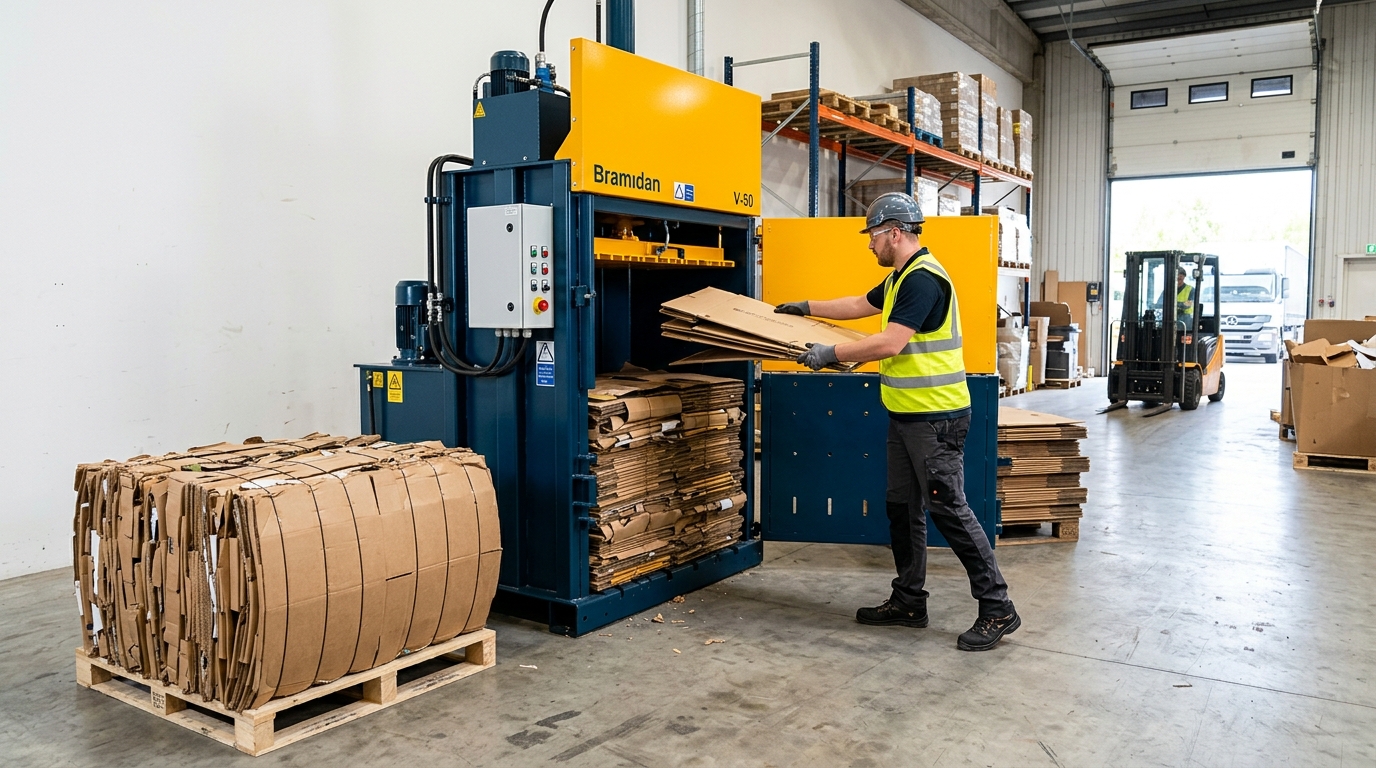
A cardboard baler is a machine that compresses old corrugated containers into dense, stackable bales for recycling. It uses a compression chamber to pack loose boxes into a manageable bundle. Businesses use balers to reclaim floor space and manage cardboard more efficiently.
Cardboard waste can pile up quickly in warehouses, retail stores, hotels, schools, and restaurants. Delivery boxes often arrive throughout the day, especially at properties with active receiving areas. Without a system, employees can spend too much time flattening boxes and finding places to stack them.
A cardboard baler gives that material a designated path. Staff load boxes into the machine, run a compression cycle, and secure the finished bale with baling wire or strapping. The bale can then wait neatly for recycling collection.
Businesses that generate steady cardboard volume often see the strongest results. A baler warehouse setup can reduce clutter around loading docks and shipping areas. It can also reduce the number of recycling bins needed at the property.
A cardboard baler can be especially useful when cardboard takes up more room than landfill trash. It keeps recyclable material separate, which supports a stronger diversion rate. That separation can also improve recycling rebate opportunities in some markets.
Our benefits of a cardboard baler page covers the operational advantages of baling in more detail. This guide focuses on selecting the right machine for your business. The right fit depends on your cardboard volume, available space, and staffing needs.
Vertical Vs Horizontal Balers Which Fits Your Volume?
Vertical balers fit smaller spaces and moderate cardboard volumes, while horizontal balers support larger throughput. The best option depends on how much cardboard moves through your facility each day. Available floor space and labor capacity also matter.
A vertical baler loads from the front and compresses material in an upright chamber. It is often a good choice for retail stores, restaurants, hotels, and small warehouses. These machines usually have a smaller footprint and can fit in tight back-of-house spaces.
A horizontal baler processes material through a longer loading chamber. It is built for larger facilities that handle high volumes of cardboard or other recyclables. Many horizontal models support faster throughput and more automated bale handling.
| Feature | Vertical Baler | Horizontal Baler |
| Footprint | Smaller and more compact | Larger floor-space requirement |
| Throughput | Moderate daily cardboard volume | High-volume recycling operations |
| Bale Weight | Often 100 to 500 pounds | Often hundreds or thousands of pounds |
| Best Fit | Retail, hospitality, small warehouses | Distribution centers and industrial sites |
| Loading Style | Front-loading chamber | Conveyor or larger feed opening |
| Labor Need | Manual loading and bale tying | Can include automated systems |
Vertical equipment often works well for businesses that need a simple, dependable box baler. It gives employees an easy way to handle OCC without stacking boxes around the property. Our selection of vertical balers includes equipment built for space-conscious facilities.
Horizontal equipment is better suited to facilities where cardboard arrives in constant volume. Large warehouses and distribution centers may need a continuous material flow. Our horizontal balers support operations that need higher processing capacity.
A cardboard baler should match your waste stream without forcing employees into difficult routines. Equipment that is too small can create a bottleneck during busy periods. Equipment that is too large can use valuable space without delivering enough value.
Baler Vs Compactor Which Do You Need?
A baler is designed for recyclable materials, while a compactor handles landfill-bound trash. The two machines may look similar from a distance, but they serve different roles. Understanding that difference protects your recycling program and equipment investment.
A cardboard baler compresses dry material into a bale that can be recycled. Cardboard, plastic film, paper, and similar materials can be processed when the equipment is designed for them. The finished bale is held together with wire or strapping for collection.
A trash compactor handles mixed waste headed for disposal. It compresses bagged garbage inside a container to reduce pickup frequency. The material remains inside the compactor until a waste hauler removes the container.
Many businesses need both machines because they generate both landfill trash and cardboard. A hotel may use a compactor for housekeeping waste and a baler for delivery boxes. A distribution center may have similar needs on a much larger scale.
Our baler vs compactor guide explains these equipment differences in more detail. We can also review your material flow during a site visit. That helps identify where cardboard ends and landfill waste begins.
Sizing Guide From Small Footprint To Warehouse Scale
The right baler size depends on your cardboard volume, available room, and collection method. A compact vertical baler may suit a retail stockroom, while a larger system suits a warehouse. Sizing starts with understanding what your facility produces each week.
Start by looking at how often cardboard bins overflow or block walkways. Consider how many deliveries arrive during a normal business day. Also note how much room your team has for loading and storing bales.
A smaller vertical baler can serve businesses with limited floor space. These units may plug into standard electrical service, depending on the model. They are often a practical option for stores, hotels, and restaurants managing regular deliveries.
Larger vertical balers create heavier bales and can handle more cardboard before unloading. They work well for facilities that generate a steady volume but lack room for a horizontal system. A larger bale can reduce the frequency of recycling collection.
Horizontal balers suit large-scale recycling operations with heavy material flow. They can process material through conveyors or larger feed openings. This equipment is often used in warehouses, manufacturing plants, and distribution facilities.
The M42BC vertical stockroom baler is a good example of small-footprint equipment. It can roll into place for a simpler installation and uses 110 or 220 volt power. It crushes cardboard into a neat 150 to 175 pound bale with pre-threaded baling twine.
A cardboard baler must also fit through the delivery route and into the planned installation area. Door widths, ceiling height, electrical access, and concrete conditions all deserve attention. We review those details before equipment arrives at the site.
Cost And ROI Labor Bin Rentals And Recycling Revenue
Cardboard baler cost depends on size, automation, condition, installation needs, and available features. New vertical models commonly fall between about $5,000 and $25,000. Horizontal systems often begin around $20,000 and can rise well above $100,000 for automated high-volume models.
The purchase price is only part of the investment picture. Labor savings, reduced bin rentals, and recycling revenue can all affect the return. A baler often pays back value by improving the way employees handle boxes every day.
Consider a receiving team that spends several hours each week flattening cardboard. A baler lets staff load boxes as they work instead of building large stacks. That can reduce repetitive handling and free up time for tasks that support the business.
Bin savings can also make a difference. Loose cardboard occupies a surprising amount of space, even after employees flatten it. Baled cardboard uses less space and may reduce the need for large recycling containers.
Recycling rebates vary by market, bale quality, and commodity pricing. Clean OCC bales may have more value than mixed or contaminated cardboard. A consistent baling process can help businesses prepare material for recycling partners.
A cardboard baler does not guarantee a specific financial result for every property. The best return comes from matching equipment capacity to real cardboard volume. We can review hauling invoices and material flow to help estimate potential savings.
Installation Maintenance And Service
Baler installation requires careful planning around space, power, access, and employee workflow. We review the site before installation to avoid surprises when equipment arrives. The goal is a setup that feels natural for the people using it.
Our team considers where employees will load cardboard and where finished bales will sit. We also look at access for recycling collection and equipment service. A good layout keeps the back-of-house area organized without blocking daily work.
Training is an important part of a successful installation. Employees need to know acceptable materials, loading procedures, and safety requirements. Baling wire and bale strapping should also be handled according to the equipment instructions.
Regular maintenance helps a cardboard baler stay dependable over time. Hydraulic systems, door mechanisms, controls, and wear points need scheduled attention. A machine that receives routine care is less likely to stop during a delivery rush.
Our maintenance program helps clients stay ahead of equipment issues through planned service. We support businesses throughout Northern and Southern California. Reliable service keeps recycling operations moving without constant worry.
If your machine starts making strange noises or producing uneven bales, it needs attention. Delaying repairs can allow small issues to grow into bigger equipment trouble. Our baler repair service can help identify problems and restore performance.
Real Installs Amy's Drive-Thru And AC Marriott Pleasanton
Real installations show how the right equipment can change daily cardboard handling. We installed balers at Amy’s Drive-Thru and AC Marriott Pleasanton to solve specific back-of-house problems. Both properties needed better ways to manage deliveries without creating clutter.
At Amy’s Drive-Thru Corte Madera, we installed a Bramidan B-5 baler for cardboard recycling. The B-5 crushes 150 boxes into an easy-to-handle bale weighing 185 to 200 pounds. This gave employees a more manageable way to handle delivery boxes.
The baler reduced the need for loose cardboard bins around the property. Staff could process boxes instead of spending time flattening and stacking them manually. That helped keep the service area cleaner during busy periods.
At AC Marriott Pleasanton, the receiving area faced a similar problem with delivery cardboard. We installed an M42BC baler that crushes 150 boxes into a 185 to 200 pound bale. The equipment replaced an overflowing cardboard bin that had become an eyesore near the back of the hotel.
These projects show why equipment selection should start with the property’s actual waste flow. A cardboard baler can solve a space problem, a labor problem, or a recycling problem. Often, it helps with all three without adding unnecessary complexity.
FAQs About Cardboard Balers
Get A Cardboard Baler Guide For Your Business
We can review your cardboard volume, available space, and recycling process before recommending equipment. Call Bay Area Trash Compactor at (925) 465-5133 or contact our team to discuss the right cardboard baler for your business.