
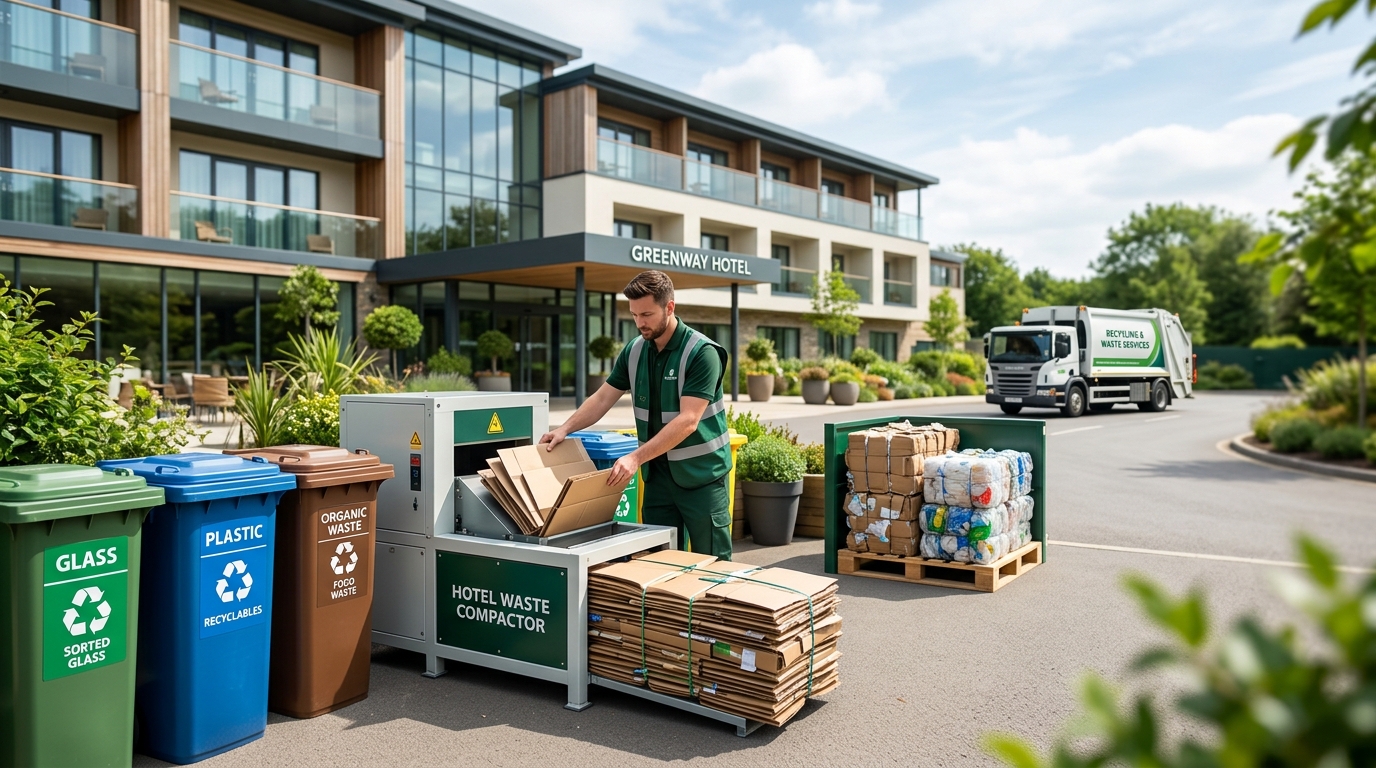
Hotel Waste Management: How Hotels Reduce Waste Volume, Noise, And Hauling Costs
Hotel waste management covers housekeeping trash, kitchen scraps, cardboard, recyclables, and organics from across the property. The goal is to reduce waste volume, limit pickup trips, and keep back-of-house areas clean. At Bay Area Trash Compactor, we are passionate about keeping waste out of landfills while helping businesses run better.
Hotels have a tougher waste job than many people realize. Guests expect spotless grounds, quiet pool areas, and no unpleasant smells near their rooms. Meanwhile, deliveries, housekeeping, banquets, and kitchens create a steady flow of material behind the scenes.
The Hidden Costs Of Hotel Waste
Hotel waste costs include more than the monthly bill from a hauler. Labor, overflowing bins, guest complaints, and unnecessary truck visits can all add expense. A better equipment plan helps ownership groups control those costs with fewer disruptions.
Housekeeping teams collect bags from dozens or hundreds of rooms every day. Kitchen staff dispose of food waste after breakfast, lunch, dinner, and events. Delivery teams also bring a steady stream of cardboard into receiving areas.
When waste equipment cannot keep up, bags and boxes spill into workspaces. Staff spend more time dealing with material that should already be contained. Those labor hours add up quickly across a hotel property.
A front load bin may look like a simple solution at first. Yet loose bags and unflattened cardboard fill those bins far faster than expected. The result is more pickups, more truck noise, and more expenses.
Hotel waste management helps properties look at the whole waste stream rather than one overflowing container. We assess how material moves from guest areas into the back of house. That process helps identify equipment that supports real day-to-day operations.
Mapping Your Hotel’s Waste Streams
Hotels need a clear picture of their waste streams before selecting equipment. Housekeeping waste, cardboard, kitchen scraps, and recyclables each require different handling methods. Mapping those materials helps management find where money and time are being lost.
Housekeeping waste often includes packaging, disposable items, and bagged room trash. These materials can build quickly during checkout periods or large group events. A compactor can reduce that loose volume before collection.
Kitchen and banquet waste brings another layer of complexity. Food scraps can be wet, heavy, and prone to creating odors around service areas. Separating organics from landfill trash supports cleaner disposal and stronger diversion rates.
Cardboard often enters the property through food deliveries, linens, amenities, and maintenance supplies. If staff flatten boxes by hand, the work can take up valuable time. A baler creates a more organized process for recycling material.
Hotel waste management works best when employees understand where each stream belongs. Clear container placement can reduce confusion in busy receiving areas. Equipment should make the right action easier for the people using it.
Compactors Turn Loose Waste Into Less Space
Compactors reduce waste volume by packing loose garbage into a smaller container. This can lower pickup frequency and reduce the space needed for disposal equipment. It also helps keep waste contained away from guest-facing areas.
A small-footprint compactor can be a strong fit for hotels with limited room. These systems handle bagged housekeeping waste and kitchen trash without requiring a massive enclosure. The right layout protects staff access while keeping the property tidy.
Compaction can turn 10 to 12 loose yards of trash into a 2-yard front load bin. That reduction changes how often a waste hauler needs to visit the property. It can also make loading areas feel less crowded.
Fewer garbage truck visits can mean quieter mornings for guests near the service area. Hotels work hard to create a calm atmosphere, especially around pools and outdoor dining spaces. A loud truck outside a guest room does not fit that experience.
We look at site access, daily trash volume, and hauling schedules before recommending equipment. Every hotel property has different service roads and available space. The equipment should fit the operation without creating extra steps for staff.
Cardboard Balers Make Recycling Easier
Cardboard balers compress delivery boxes into dense bales for recycling collection. They help hotels reduce clutter in receiving areas while saving staff from flattening boxes by hand. A well-run hotel recycling program starts with equipment that keeps pace.
Hotels receive more cardboard than many guests ever see. Food-service deliveries, bottled water, linens, amenities, and repair supplies arrive throughout the week. Without a baler, empty boxes can take over the back of house.
A baler can compress 150 boxes into one manageable bale weighing about 185 to 200 pounds. That gives staff a more organized way to prepare cardboard for recycling. It also reduces the need for large recycling bins that can become an eyesore.
Our page on cardboard balers explains why compacted recycling material is easier to manage. Baling helps hotels reclaim valuable space behind the property. It also supports diversion goals without adding unnecessary labor.
A cleaner receiving area makes a difference for hotel employees and delivery teams. Staff can move carts, supplies, and linens without navigating around box stacks. It is a small operational change with a noticeable daily impact.
Food Waste Solutions For Hotel Kitchens And Banquets
Food waste solutions help hotels manage heavy organics from kitchens, room service, and banquet operations. Composters can reduce material volume while supporting organics diversion programs. This is especially helpful for properties that host regular events.
Banquet waste can rise fast after weddings, conferences, or large catered gatherings. Food scraps, spoiled ingredients, and prep waste can fill containers before the event ends. Wet materials also create odor concerns if they sit too long.
Food composters give kitchen teams a more controlled way to handle organics. They reduce the amount of food waste that ends up mixed with landfill trash. That can improve a property’s diversion rate and support ESG goals.
Our food composters can support hospitality properties looking for practical organics solutions. We help hotels evaluate equipment based on food volume and available space. The goal is a setup that works during a normal shift and a packed event.
A hotel’s waste area should not become a source of odors near guest spaces. Separating organics helps keep wet food waste from sitting in standard trash containers. It also gives housekeeping and kitchen teams a cleaner disposal routine.
Case Study: How AC Marriott Pleasanton Cut Its Trash Bill 55%
AC Marriott Pleasanton cut its previous trash bill by 55 percent after replacing its old compactor. The project also saved an estimated $12,000 to $16,000 per year on hauling costs. Labor savings reached approximately $9,000 per year after the new equipment was installed.
The hotel completed an extensive remodel when ownership examined its waste and recycling system. We worked with the ownership and management team to understand existing material flow. The goal was to create a cleaner, more efficient approach behind the property.
The old self-contained compactor sat next to the swimming pool and created odor concerns. Its location made waste handling harder and placed unpleasant smells too close to guests. We removed that equipment and moved the trash and compost area away from the pool.
Our team installed a small-footprint SV2 Compactor for housekeeping and kitchen waste. The SV2 compacts 10 to 12 loose yards of waste into a 2-yard front load bin. This supported fewer pickups while creating more space around the service area.
For cardboard, we installed an M42BC baler near the hotel’s receiving area. The baler crushes 150 boxes into an easy-to-handle bale weighing 185 to 200 pounds. It removed the need for employees to flatten boxes and reduced the overflowing cardboard bin.
The improved system helped the hotel manage waste without disrupting the guest experience. It also made the back-of-house operation more organized for employees. You can see more hotel success stories from our work with hospitality properties.
The Sustainability Case For Fewer Trucks And Better Guest Experience
Fewer waste truck visits can reduce emissions, noise, and traffic around a hotel property. They can also support sustainability reporting and stronger ESG efforts. Better waste equipment supports both operational goals and guest expectations.
Garbage trucks can create noise early in the morning or during busy service periods. A full waste enclosure can also attract casual dumpers looking for an easy place to leave material. Those issues create extra work for the hotel team.
Compaction allows hotels to store more waste in less space between collection days. That can reduce the number of truck trips needed each week. Fewer trips also mean less noise near guest rooms, patios, and pool areas.
A clean property appearance supports the experience hotels work hard to deliver. Guests notice overflowing bins, scattered cardboard, and odors around walkways. A better waste system helps keep those concerns out of sight.
Hotels like Four Seasons Napa Valley and Bardessono Hotel and Spa also show how waste planning matters in luxury hospitality. These properties need solutions that respect both service standards and environmental goals. Our sustainability expertise helps clients balance those priorities.
We provide waste equipment support throughout Northern and Southern California. Our team understands that hotel operations run every day, including weekends and holidays. Equipment should support staff without creating surprises during a full property schedule.
FAQs About Hotel Waste Management
How Do Hotels Manage Their Waste?
Hotels manage waste by separating housekeeping trash, recyclables, cardboard, and organics. Compactors, balers, and composters help reduce the volume before a hauler collects it. Staff training helps keep material in the correct waste stream.
How Much Waste Does A Hotel Produce Per Room?
Waste output varies based on occupancy, food service, events, and property amenities. Hotels with restaurants or banquet facilities often produce more food waste and cardboard. A waste review helps management measure the property’s actual needs.
What Is The Best Trash Compactor For A Hotel?
The best hotel trash compactor matches the property’s waste volume and available service space. A small-footprint unit can work well where access is limited. Larger properties may need equipment with greater capacity for busy operations.
How Can Hotels Reduce Waste Disposal Costs?
Hotels can lower disposal costs by compacting loose trash and separating cardboard for recycling. Food waste programs can also reduce landfill-bound material from kitchens and banquets. Fewer pickups can lead to lower hauling expenses over time.
Ready To Rethink Your Hotel’s Waste Plan Here’s How To Get Started
We can review your hotel’s waste flow, service area, and hauling schedule to recommend practical equipment. Call Bay Area Trash Compactor(opens in new tab) at (925) 465-5133 or contact our team to start improving your property’s waste system.