
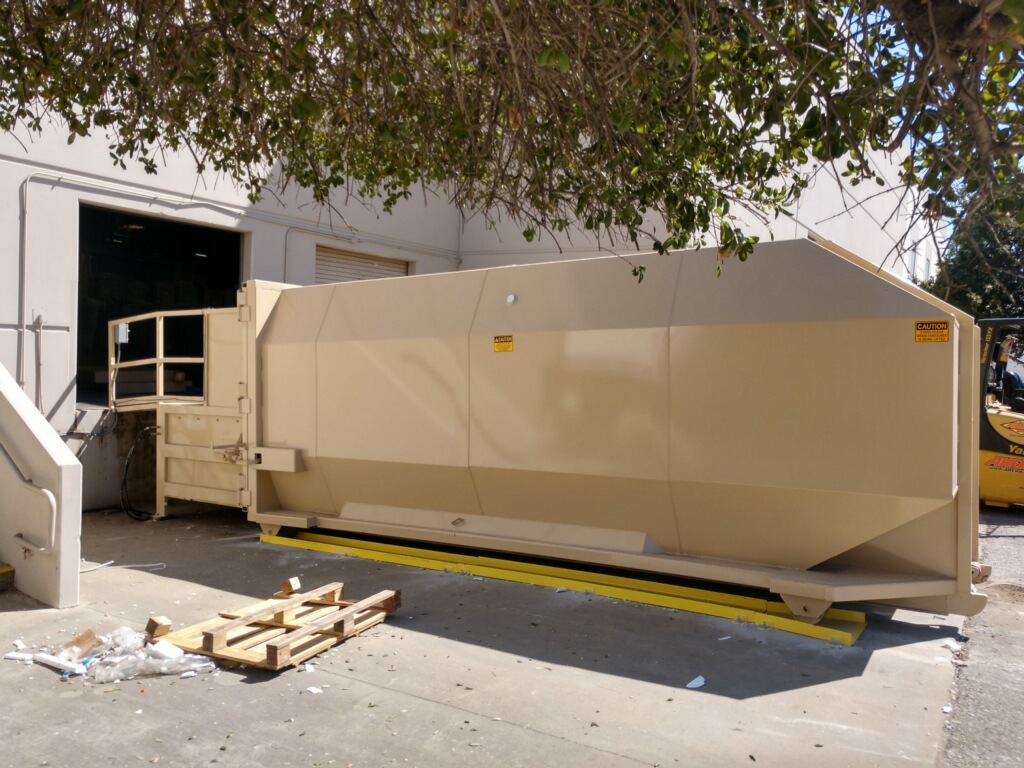
Self Contained Compactor vs. Stationary Compactor: Key Differences
When it comes to managing commercial waste effectively, choosing the right compactor can make a major difference in sanitation, efficiency, and long-term operating costs. Two of the most common options are self contained compactors and stationary compactors, each designed for different types of waste streams and facility needs. While both help reduce waste volume, their structural differences impact how they’re used, what kind of waste they handle best, and how they affect your site’s cleanliness and workflow.
There are key differences between self contained and stationary compactors, which we’ll explain below. As well as when to use each, and explore how add-ons like integrated cart tippers can further streamline your operations. So that whether you’re managing food waste at a hotel or dry packaging in a warehouse, you will be prepared to make a more informed, efficient decision.
What Is a Self Contained Compactor?
A self contained compactor is an all-in-one unit where the compactor and the waste receiver are permanently connected and hauled away together when full. This design makes it ideal for managing wet or mixed waste streams, such as food scraps or liquid byproducts, because the sealed container prevents leaks, odors, and pest infestations.
When the unit is ready to be emptied, the entire compactor, waste and all, is taken directly to the landfill or waste processing facility, minimizing mess and contamination at the site. This containment makes self contained compactors a preferred solution for places like restaurants, hotels, hospitals, grocery stores, and shopping centers, where waste often includes moisture or organic material. They also help maintain site cleanliness and reduce sanitation risks associated with liquid waste buildup.
What Is a Stationary Compactor?
A stationary compactor is a two-part system where the compactor head remains fixed on-site, and only the receiver, or container holding the compacted waste, is hauled away when full. This setup is best suited for dry waste streams, such as cardboard, foam, shrink wrap, or paper, typically found in production facilities, warehouses, or retail distribution centers.
Because the compactor and receiver disconnect during removal, there is a potential for liquid leakage, odors, and waste spillage, especially if wet materials are placed inside. For this reason, stationary compactors are not recommended for facilities that generate food waste or other materials with high moisture content. Instead, they shine in operations that produce large volumes of dry, bulky waste where efficient compaction and reduced haul frequency are the primary goals.
Key Differences Between Self Contained and Stationary Compactors
Understanding the differences between self contained and stationary compactors can help you choose the right system for your specific waste management needs. Here are the key distinctions:
- Design & Hauling Process
A self contained compactor is a sealed, single-unit system that includes both the compactor and the receiver. When full, the entire unit is hauled away for disposal. In contrast, a stationary compactor keeps the compactor head fixed on-site while only the detachable receiver is removed and emptied. - Leak and Odor Control
Self contained compactors are designed to prevent leaks and odors, making them ideal for managing wet waste. Their sealed construction keeps liquids contained, reducing the risk of mess and pest problems. Stationary compactors, on the other hand, have a connection gap between the compactor and the receiver, which can allow liquid waste to spill onto the ground which creates sanitation issues and unpleasant odors. - Best Waste Types
Self contained compactors are suited for wet or mixed waste, like food scraps, organic matter, or waste with residual liquids. Stationary compactors are recommended only for dry waste, such as packaging materials, cardboard, paper, and foam. - Maintenance and Cleanliness
The enclosed design of a self contained unit simplifies site maintenance by reducing spillage and cleanup needs. Stationary compactors may require frequent site cleaning due to debris or liquid waste accumulating during bin removal. - Operational Flexibility
Self contained compactors offer a more sanitary and flexible solution for businesses like hospitals, hotels, and restaurants, where cleanliness is a top priority. Stationary compactors are more cost-effective for high-volume, dry waste environments with fewer sanitation concerns.
These distinctions can significantly impact both your day-to-day operations and long-term waste management costs, making the right choice essential for efficiency and compliance.
Use Case Scenarios: Which Type Is Right for Your Facility?
Choosing between a self contained or stationary compactor largely depends on the type of waste your facility generates and your site’s operational needs. Below are common use cases to help guide your decision:
Self Contained Compactor – Best for Wet or Mixed Waste
If your business regularly handles waste with high moisture content, a self contained compactor is the safer, cleaner option. These units are fully sealed, preventing liquid leaks and reducing the risk of odors or pest infestations. They’re ideal for:
- Restaurants and food courts – Frequent disposal of food scraps and liquids
- Hotels and resorts – Large volumes of mixed waste from dining, events, and housekeeping
- Hospitals and healthcare facilities – Medical and cafeteria waste requiring sanitary containment
- Shopping malls and retail centers – Mixed waste from food tenants and packaging materials
- Beverage or liquid product manufacturers – Waste involving containers with liquid residue
Stationary Compactor – Best for Dry Waste
Stationary compactors excel in settings that produce high volumes of dry, bulky waste. Since they aren’t sealed, they’re not recommended for any waste containing liquids. They’re ideal for:
- Warehouses and distribution centers – Handling boxes, shrink wrap, and shipping materials
- Manufacturing plants – Disposing of dry packaging waste, foam, and cardboard
- Office buildings – Compacting paper, dry recyclables, and clean refuse
Matching the right compactor to your waste stream helps maximize efficiency, reduce mess, and ensure regulatory compliance.
Optional Add-On: Integrated Cart Tippers
An optional feature that can significantly enhance the functionality of both self contained and stationary compactors is the integrated cart tipper. These tippers allow staff to easily and safely empty toter carts, tipper bins, or even 2-yard containers directly into the compactor, eliminating the need for manual lifting. This not only improves worker safety by reducing the risk of injury, but also speeds up the waste handling process, making it more efficient and less labor-intensive. For facilities with frequent waste collection from multiple smaller bins, an integrated cart tipper is a smart investment that streamlines operations and ensures a cleaner, more ergonomic workflow.
The Right Compactor Starts with the Right Partner
Choosing between a self contained compactor and a stationary compactor comes down to one key factor: the type of waste your facility generates. If you’re dealing with wet, messy, or mixed waste, a self contained unit will help you maintain a cleaner, safer environment while reducing odors and pest issues. For facilities that produce only dry waste, like packaging materials, cardboard, and foam, a stationary compactor can offer a cost-effective, high-volume solution.
Still not sure which option is best for your business? Let our experts help. Bay Area Trash Compactor specializes in matching the right equipment to your waste stream so you can streamline operations, improve sanitation, and lower hauling costs. Contact us today to learn more or schedule a custom equipment consultation. We’re here to help you simplify waste management, one compactor at a time.