
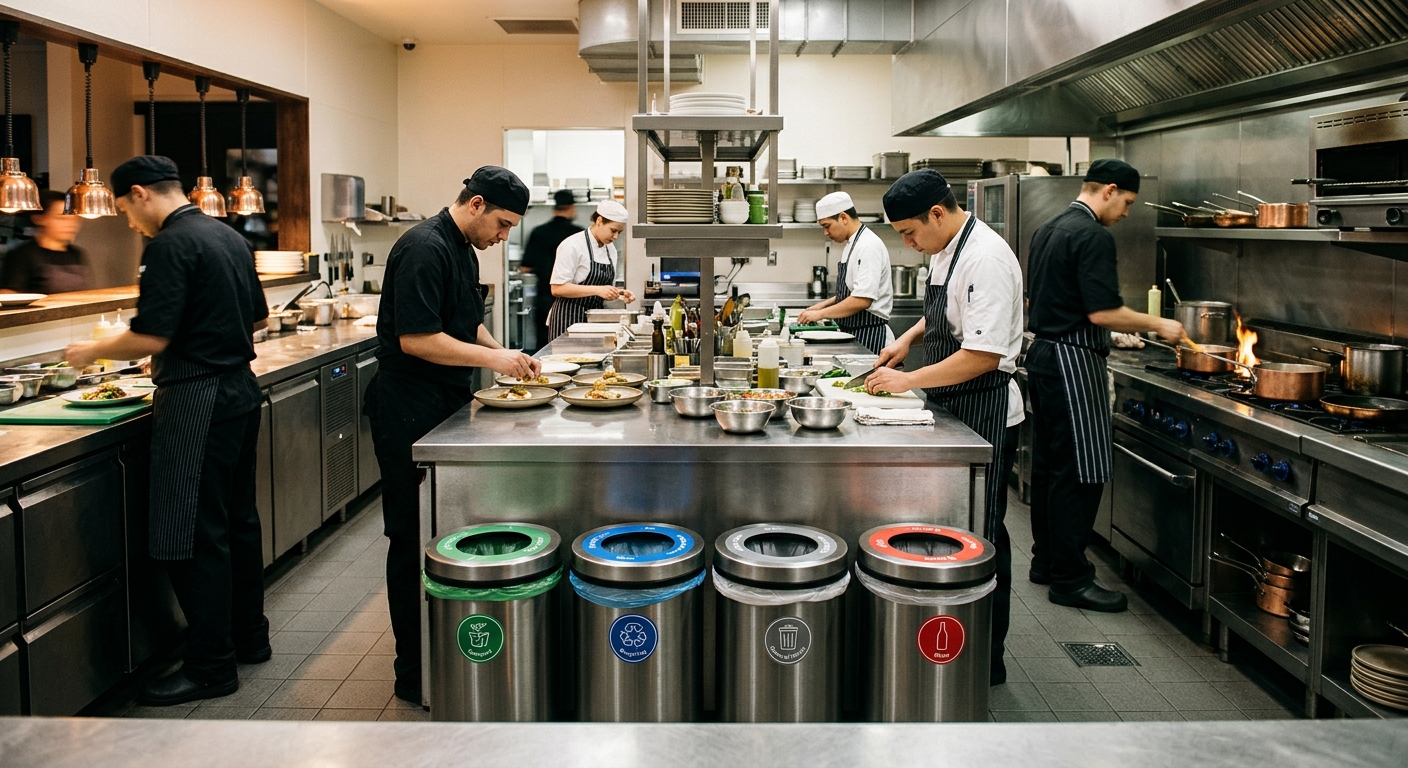
Restaurant Waste Management That Keeps Your Kitchen Moving
Restaurant waste management covers how your business handles food scraps, cardboard, and remaining landfill trash throughout each shift. A practical system keeps materials moving from preparation areas into the right collection containers without creating extra work. At Bay Area Trash Compactor, our mission is keeping waste out of landfills while helping businesses operate more efficiently.
Restaurant Waste Management Starts Before The Dumpster
Effective restaurant waste management begins where employees unpack deliveries or prepare ingredients, well before anything reaches the outdoor enclosure. Those early decisions determine how much material enters each container and how quickly your available disposal space disappears.
Picture a Friday delivery arriving while your kitchen prepares for lunch. Empty boxes collect beside shelving while someone carries dripping trash bags through the receiving area.
The problem starts with competing tasks and disposal stations that do not match the work. Moving containers closer to those activities can help employees separate materials without taking another trip across the kitchen.
We look at these everyday movements when discussing equipment with restaurant owners. The goal is a process that feels manageable during the busiest hour, with fewer workarounds for employees.
Watch One Week Of Waste Before Making Changes
A useful restaurant waste management review starts with observing an ordinary week rather than guessing from one overflowing dumpster. Your Tuesday lunch shift may produce very different waste from Saturday dinner service.
Record how many bags leave the kitchen and note when outdoor containers approach capacity. Track cardboard separately so delivery packaging does not distort your estimate of landfill trash.
Use a consistent bag size whenever possible during this review. Ten loosely filled bags tell a different story from ten heavy bags packed near their safe handling limit.
Ask employees where waste creates delays during their shifts, since recurring problems often become invisible to management. The dish crew may identify a troublesome loading route that never appears on your hauling invoice.
A brief observation period gives us something useful when discussing equipment capacity. It also helps distinguish excessive waste generation from containers that simply hold material inefficiently.
Give Each Material A Practical Destination
A dependable restaurant waste management system separates materials according to their accepted collection or processing routes. Food scraps need an organics plan, while clean cardboard needs protection from moisture and food contamination.
Landfill trash should contain the remaining materials that your local programs cannot recover. Accepted items vary by provider, so labels should reflect your actual collection service.
Place cardboard collection near receiving, where employees already unpack incoming supplies. Position food-scrap containers near preparation areas without blocking work surfaces or interfering with sanitation procedures.
Dish stations may need a different arrangement because returned plates contain mixed materials. Employees need enough room to separate leftovers before disposing of packaging that your program cannot accept.
Avoid building a system that depends on someone sorting everything again outside. Separation works better when employees can put materials in the correct container during their original task.
Reduce Prep Waste Before Buying More Capacity
Food purchasing and preparation habits belong in any restaurant waste management conversation because equipment cannot recover money spent on spoiled ingredients. Reviewing repeat disposal patterns can reveal opportunities before you change collection service.
Start with ingredients that employees discard several times each week. Repeated waste may point to oversized orders or preparation quantities that exceed actual demand.
A smaller preparation batch can help during slower periods without leaving the line short during predictable rushes. Kitchen managers can use recent sales patterns when deciding what to prepare next.
Keep older ingredients accessible so employees do not reach past them for newer deliveries. Date labels help when everyone understands the same system and applies it consistently.
Separate safe edible surplus from material that belongs in organics collection. Donation arrangements require appropriate handling, with applicable food-safety requirements guiding what can be recovered.
Keep Cardboard Out Of The Trash Container
Cardboard deserves its own restaurant waste management plan because delivery boxes can consume container space long before collection day. Even flattened boxes occupy valuable room when they accumulate without a reliable removal routine.
For lower-volume restaurants, a designated recycling area may provide enough capacity between pickups. Higher-volume operations can consider a baler that compresses suitable cardboard into secured bundles.
A baler needs space for loading and finished-bale handling, along with access for service. Recycling partners should confirm acceptable bale specifications before you commit to a machine.
Plastic film requires separate attention because acceptance depends on the recycling program and equipment specifications. Employees should never assume every wrapping material belongs inside the same machine.
Keeping cardboard dry helps preserve its usefulness for recycling and avoids unnecessary contamination. A covered storage location can protect boxes before employees process them into bales.
Match Compaction To Your Remaining Trash
Once recoverable materials have separate destinations, restaurant waste management becomes easier to evaluate from an equipment standpoint. The remaining bagged trash shows what your compactor actually needs to handle.
A trash compactor compresses approved waste so loose bags occupy less space before collection. That increased storage efficiency can support fewer pickups when your hauling agreement and operating conditions allow.
Wet landfill trash requires attention to liquid containment rather than capacity alone. Self-contained equipment can help contain moisture-heavy refuse during compaction and transport when maintained according to manufacturer guidance.
Food scraps still need the appropriate organics route under your local program. A sealed container does not turn landfill disposal into organics recycling or replace applicable separation requirements.
We consider actual material characteristics before discussing equipment options for a kitchen. Our equipment service also supports existing systems when performance problems begin affecting daily operations.
Review Collection Frequency After The System Changes
Restaurant waste management improvements should lead to a conversation with your hauler about collection needs. Keeping the same pickup schedule after reducing container demand can leave potential savings unrealized.
Compare container fullness before scheduled collections over several normal operating weeks. Include busy periods so any proposed service reduction leaves adequate capacity when your restaurant needs it.
Review your agreement before assuming fewer collections will lower every charge. Fixed fees and weight-based disposal costs can affect the financial result after service changes.
A dense container can reach weight limits before its available space is exhausted. Your hauler should confirm acceptable loading conditions before collection frequency changes take effect.
The right schedule balances storage capacity with sanitation needs and local requirements. Fewer pickups should create a dependable routine without leaving employees managing overflowing bags between visits.
Make Organics Handling Work With California Rules
California restaurant waste management plans need to account for SB 1383 and local organics collection requirements. Businesses generally must sort organics according to their jurisdiction’s service or use a qualifying self-haul arrangement, with applicable exceptions.
Confirm accepted materials directly with your local jurisdiction or collection provider. Rules for liners and food-soiled packaging can differ, so generic signs may give employees incorrect instructions.
Some larger restaurants also have edible-food recovery obligations that require attention beyond ordinary food-scrap collection. Operators should confirm their classification and any required documentation through their local jurisdiction.
Onsite processing equipment also requires careful review before purchase or installation. Reducing food-waste moisture does not automatically make the resulting material acceptable for landfill disposal.
Ask where processed output must go and how that route fits local requirements. This article provides general operational information, and restaurant owners should seek qualified guidance for specific compliance questions.
Keep Equipment Reliable Through Daily Use
Routine maintenance protects restaurant waste management improvements by keeping equipment available when employees need it. A failed machine can quickly send an organized receiving area back into overflow mode.
Follow manufacturer instructions for cleaning and have qualified personnel perform required inspections. Employees should report leaks or unusual operation instead of repeatedly resetting equipment without understanding the cause.
Never reach into machinery or attempt to clear a jam while equipment remains energized. Trained personnel must follow the applicable lockout procedures before performing work that exposes hazardous moving parts.
Our maintenance program helps businesses plan equipment care around actual use. We also share equipment information through our news section for owners reviewing their waste-handling options.
FAQs
Give Your Kitchen More Breathing Room
Contact Bay Area Trash Compactor to discuss restaurant waste management equipment that fits your property. Call (925) 465-5133 to request a site review based on your actual waste flow.