
Restaurant Trash Compactor Vs Baler Which Equipment Does Your Kitchen Need
Restaurant trash compactor vs baler decisions become easier when you look at what enters your waste area every day. Mixed kitchen trash, food residue, cardboard deliveries, and plastic film each need a different disposal path. At Bay Area Trash Compactor, we help restaurants keep material out of landfills while making back-of-house work easier.
A compactor and a baler may sit near the same loading area, though they do very different jobs. One manages landfill-bound trash, while the other prepares recyclable material for collection. The right equipment depends on your real waste volume, not a guess.
Restaurant Trash Compactor Vs Baler Basics
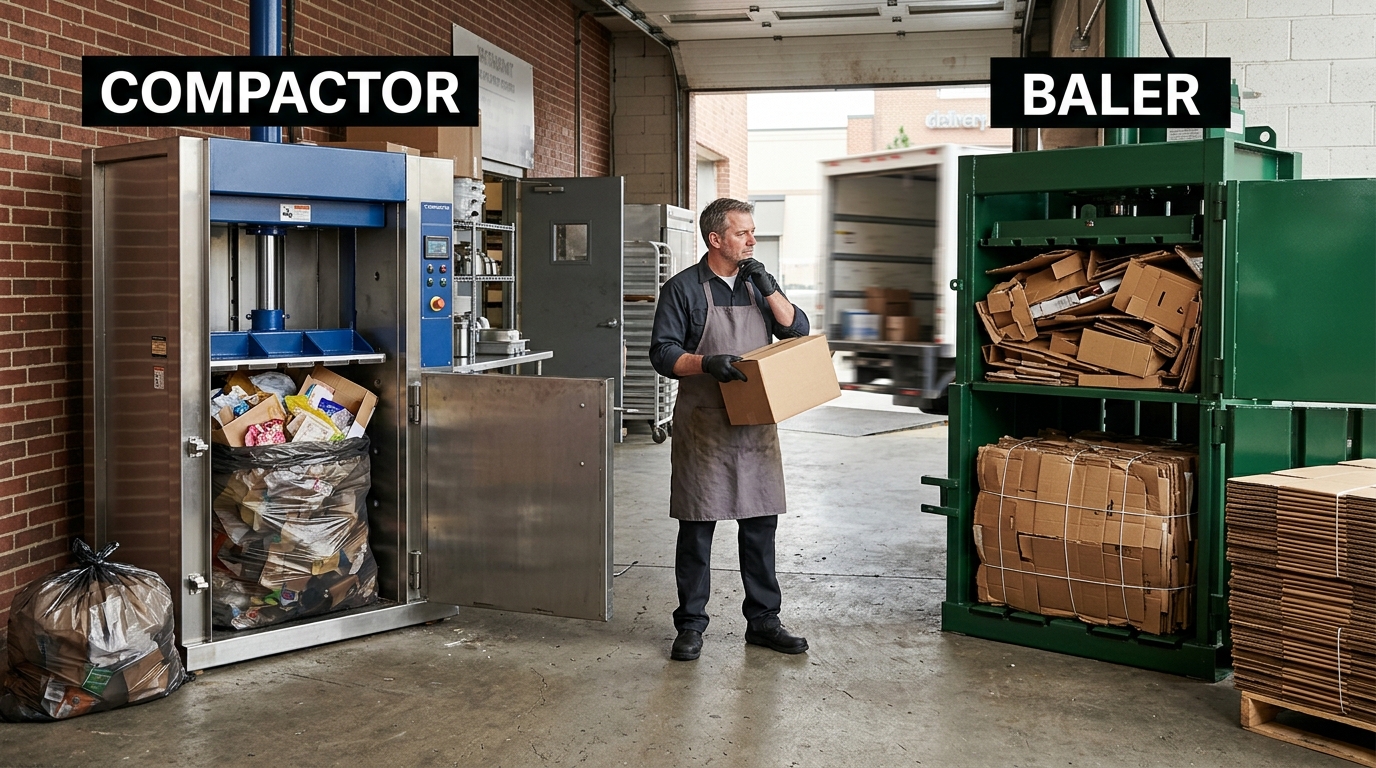
Restaurant trash compactor vs baler comparisons begin with one simple question: what materials are you handling most often? A compactor manages mixed waste that cannot be recycled. A baler compresses recyclable cardboard and plastic film into dense bundles.
A restaurant trash compactor handles bagged garbage from kitchens, dining areas, and dish stations. Food residue, napkins, disposable service items, and other mixed materials can go into the unit. The machine compresses waste so it takes up less room before the hauler arrives.
A baler is built for dry recyclable material. Cardboard boxes, clean paperboard, and plastic film can be loaded into the machine. The baler compresses those materials into secured bales for recycling collection.
The equipment may look similar to someone passing through the loading area. In practice, each machine has a different purpose and loading process. Putting the wrong material in either unit can create equipment trouble or ruin recyclable material.
Restaurants with steady kitchen waste often need a compactor first. Restaurants with a heavy delivery schedule may need a baler too. The best plan depends on what fills your containers before the next pickup.
Mixed Trash Belongs In A Compactor
A compactor is designed to reduce the volume of landfill-bound material. It compresses loose bags into a denser load that fits inside a container. This can help restaurants reduce pickup frequency and keep waste areas cleaner.
Restaurant trash compactor vs baler decisions are often settled by looking at the kitchen waste stream. Food-soiled packaging, paper napkins, bagged trash, and mixed refuse belong in a compactor. These materials are usually not suitable for recycling.
Busy kitchens generate waste all day long. Prep scraps, expired ingredients, plate waste, and food containers can fill standard bins quickly. A compactor gives staff a designated place to handle bagged waste without adding more dumpsters.
Some restaurants handle a high volume of wet waste. Food scraps and liquid-heavy bags can create leaks and odors around standard containers. A self-contained compactor can help contain liquids during compaction and hauling.
Self-contained systems combine the compactor and container into one sealed unit. This design helps reduce spills in waste enclosures and around loading areas. It can be a practical choice for restaurants, grocery stores, and cafeterias.
A compactor can also help reduce truck traffic near the property. More material fits into each container, so the hauler may not need to visit as often. That can reduce noise around patios, drive-thru lanes, and employee entrances.
Cardboard And Film Belong In A Baler
A baler prepares recyclable materials for collection by compressing them into secured bundles. It keeps cardboard and plastic film separate from landfill waste. This can help restaurants reclaim space near delivery and receiving areas.
Restaurants receive cardboard constantly from food distributors and beverage companies. Paper products, cleaning supplies, and takeout packaging also arrive in boxes. Those deliveries can create a pile before the lunch crowd even shows up.
Restaurant trash compactor vs baler choices should account for delivery volume. If cardboard fills a recycling bin every few days, a baler may make sense. It can turn loose boxes into dense bales that wait neatly for collection.
Plastic film may also be recyclable when it is clean and accepted by the collection program. Shrink wrap from bulk deliveries is a common example. A baler can help keep that material contained rather than mixed into general trash.
A baler does not replace a trash compactor for restaurant operations. Food residue and mixed garbage should not enter a cardboard baler. The recycling stream needs to stay clean for bales to remain useful.
Our guide on trash compactors versus balers explains how each system handles different material types. The guide can help restaurant operators understand the role of each machine. We can also review your waste stream during a site visit.
Restaurant Trash Compactor Vs Baler For High Delivery Volume
Restaurants with high delivery volume may benefit from both a compactor and a baler. The compactor serves the kitchen, while the baler handles boxes from incoming deliveries. Together, they help keep different materials from crowding one waste area.
A busy full-service restaurant may receive produce, beverages, dry goods, and disposable supplies several times each week. Those deliveries bring cardboard that can quickly fill up recycling containers. Meanwhile, the kitchen keeps producing bagged trash and food-related waste.
Restaurant trash compactor vs baler planning should consider both sides of the operation. The delivery side needs a place for boxes and film. The kitchen side needs equipment that can manage mixed trash without leaks or overflow.
Separating the materials can also help staff work faster. Delivery teams can flatten or load boxes near the receiving area. Kitchen staff can send bagged waste to the compactor without walking through a pile of cardboard.
This setup can be especially helpful for restaurants with small back-of-house spaces. Keeping materials separated stops cardboard from taking over the same enclosure used for trash. It also makes the area easier to clean at the end of a shift.
Some properties only need one piece of equipment at first. A restaurant with little cardboard may benefit more from a properly sized compactor. A café receiving large shipments may find a baler more useful for its limited available space.
Food Heavy Kitchens Need Strong Containment
Food-heavy kitchens need waste equipment that can handle moisture and frequent loading. Wet bags can leak, smell, and attract pests around an enclosure. A self-contained compactor helps keep moisture-heavy material contained during daily use.
Restaurant trash compactor vs baler comparisons should always account for food residue. Balers are not built for wet bags, leftover food, or contaminated packaging. Those materials can damage the machine and make the bale unacceptable for recycling.
A compactor can handle the bagged waste that comes from prep areas and dish stations. It reduces the volume of trash before collection. That gives restaurants more control over how much material sits outside the kitchen.
The compactor size should match the amount of food waste produced during busy periods. A unit that fills too quickly can lead to overflow and extra pickup requests. A unit that is too large may use valuable enclosure space without enough benefit.
We look at bag volume, peak days, available space, and hauler access before making equipment recommendations. This approach helps us match the unit to the restaurant rather than forcing a standard model. Waste equipment should fit the work, not get in the way.
Our maintenance program helps restaurants keep compactors and balers operating through frequent use. Food-service environments can be hard on equipment, especially when usage remains high. Planned service helps protect the investment and reduce unexpected downtime.
How Cardboard Baling Saves Time
Cardboard baling can reduce the time employees spend flattening boxes by hand. A baler gives staff one place to load material after a delivery. That simple routine can make receiving areas feel more organized.
Loose cardboard is a space problem before it becomes a recycling problem. Boxes fill hallways, crowd storage rooms, and block paths near loading areas. When staff wait until later to handle them, the pile gets harder to manage.
Restaurant trash compactor vs baler decisions should account for labor costs too. A baler can reduce the repeated handling required for loose boxes. Employees load the machine as deliveries are unpacked instead of building stacks throughout the day.
The finished bale takes up far less room than loose cardboard. It can remain in a designated storage area until recycling collection. This may reduce the need for extra cardboard bins near the property.
Restaurants can also avoid sending recyclable boxes to the landfill compactor. Cardboard has a different recycling value when kept dry and separated. Baling supports a cleaner recycling stream and a stronger diversion rate.
Our equipment service team can help keep balers and compactors in working condition. Equipment problems can turn an organized waste routine into a messy situation quickly. Regular service helps keep your system ready for daily use.
Space And Pickup Access Matter
Available space can shape the restaurant trash compactor vs baler decision. Equipment needs a safe loading path, room for service, and access for the recycling or waste hauler. A site that looks large enough on paper may feel much tighter during operations.
A compact restaurant may not have room for both machines near the kitchen. In that case, we look at the materials causing the biggest issue. Equipment should solve the most costly problem first.
An outdoor enclosure must also accommodate hauling trucks. The hauler needs room to approach the container, complete service, and leave safely. Gates, parking areas, and drive-thru traffic can affect the equipment layout.
Indoor equipment needs the right electrical supply and enough clearance around it. Baler doors, loading areas, and bale removal paths all need room. Staff should not have to create awkward workarounds just to load cardboard.
Restaurant trash compactor vs baler planning works best when we visit the property first. We assess the actual layout and watch how waste moves through the site. That gives restaurant owners a recommendation based on real working conditions.
Our news section shares practical updates about waste equipment and commercial waste operations. These resources can help owners understand how different systems support better material handling. A few smart adjustments can improve the entire back-of-house routine.
The Cost Of Mixing Materials
Mixing cardboard with landfill waste can raise hauling costs without adding value. Loose boxes fill trash containers quickly and leave less room for bagged kitchen waste. That can result in more pickups than the restaurant really needs.
Sending food-soiled material into a baler creates another problem. Contaminated cardboard may not be accepted for recycling collection. It can also create odors and extra cleanup inside the equipment.
Restaurant trash compactor vs baler systems keep each stream in its proper place. The compactor handles mixed landfill waste, while the baler handles clean cardboard and plastic film. This separation supports a smoother pickup schedule and a cleaner waste area.
A restaurant that uses both systems can manage its waste with more control. Cardboard does not crowd the trash container, and food waste does not contaminate recycling. That makes the property easier to maintain during a hectic week.
We help restaurants understand what equipment will give them the strongest return. A system should reduce labor, container needs, and hauling pressure. It should also be simple enough for staff to follow every day.
Which Equipment Fits Your Kitchen
The right equipment depends on what fills your waste area first. Restaurants with heavy food waste usually need a compactor as their main solution. Restaurants with frequent deliveries may need a baler to manage cardboard.
Restaurant trash compactor vs baler recommendations should begin with a site review. We look at daily bag volume, cardboard output, waste enclosure size, and pickup schedules. That information helps us identify the equipment that matches the actual workload.
A restaurant may also benefit from a phased approach. Start with the equipment that solves the most urgent issue. Add a second system later if delivery volume or recycling needs increase.
Equipment should make the workday easier for kitchen teams and managers. It should not add a complicated process that nobody has time to follow. A practical system keeps waste moving without slowing down service.
FAQs
Put The Right Machine In Place
The right compactor, baler, or combined setup can make your waste area easier to manage. Contact Bay Area Trash Compactor for equipment guidance based on your actual waste volume, or call (925) 465-5133.