
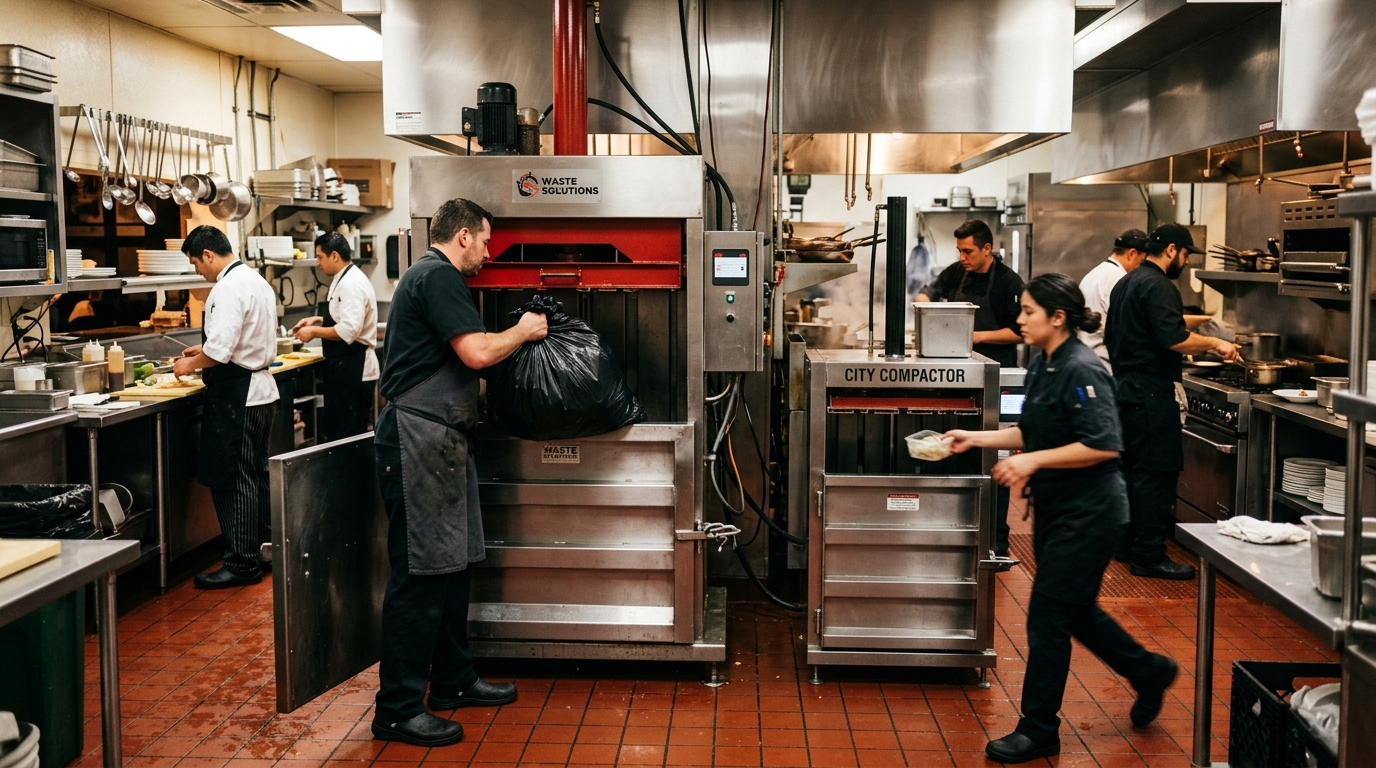
Restaurant Trash Compactor Sizes For Busy California Kitchens
Restaurant trash compactor sizes determine how well a kitchen handles daily waste without overflowing bins or costly extra pickups. The right unit matches bag volume, wet waste, enclosure space, and hauler access. At Bay Area Trash Compactor, we help restaurants keep waste out of landfills while making busy operations run better.
A compactor should make the back-of-house routine easier, even during a packed dinner rush. Too small, and the unit fills before the hauler arrives. Too large, and it can consume valuable space while adding unnecessary cost.
Restaurant Trash Compactor Sizes Start With Daily Waste Volume
Restaurant trash compactor sizes should reflect how much bagged waste leaves the kitchen every day. A clear picture of daily volume helps us recommend equipment that handles your workload without creating overflow. It also helps reduce the temptation to schedule pickups that your restaurant does not need.
Start by watching your waste area for a typical business week. Look at how many bags leave the kitchen before lunch, after dinner, and following delivery days. The numbers may change during weekends, events, or seasonal rushes.
A quick count of trash bags gives a useful starting point. Still, bag count alone does not tell the entire story. Some bags are packed with dry packaging, while others hold heavy food scraps and liquid.
A busy quick-service restaurant can fill multiple containers each day. A full-service restaurant may create less packaging but more wet kitchen waste. Each operation has its own rhythm, and the compactor should keep pace.
Restaurant trash compactor sizes are often grouped by container capacity in cubic yards. Smaller operations may need a compact solution for limited waste output. Higher-volume kitchens often need more capacity between hauling visits.
Our team looks at real waste conditions rather than guessing from a menu or seating chart. We want to know how the restaurant operates on its busiest day. That is when the equipment has to earn its keep.
Wet Waste Changes The Equipment Need
Restaurants that generate food waste often need equipment built to contain liquids. Self-contained compactors combine the packing system and container into one sealed unit. This helps reduce leaks and odors around the disposal area.
Kitchen waste can include food scraps, wet packaging, spoiled ingredients, and grease-soaked materials. Those materials can create runoff if they enter the wrong kind of container. A wet trash problem can turn into a sanitation headache pretty fast.
Self-contained equipment is a strong option for restaurants and grocery stores handling moisture-heavy refuse. The container stays with the compactor during hauling, which helps keep liquids contained. This can protect the waste pad and surrounding work areas from messy spills.
Stationary compactors are often better suited to dry material. Paper, cardboard, packaging, and general dry waste can work well in this type of setup. The compactor remains onsite while a separate container is taken away by the hauler.
Restaurant trash compactor sizes matter here because capacity should match the type of waste entering the machine. A large unit without proper liquid containment can create problems. A sealed self-contained unit can keep the waste area cleaner when food waste drives the load.
We help restaurant owners look at both waste volume and waste type. The answer should fit the actual material leaving the kitchen. Nobody needs a beautiful equipment plan that fails after the first busy weekend.
Restaurant Trash Compactor Sizes And Available Space
The available enclosure space sets practical limits on restaurant trash compactor sizes. A unit needs room for loading, servicing, and safe hauler access. A tight layout can affect the equipment type as much as daily waste volume.
Many restaurants have limited room behind the building. Delivery doors, grease bins, utility connections, and employee paths can crowd the same space. The waste area often gets whatever square footage remains after everything else is planned.
We visit the property before recommending a compactor layout. We measure the enclosure and look at how staff carry bags from the kitchen. That helps avoid installing equipment that creates an awkward or unsafe route.
Vertical compactors can help properties with limited available space. They use a smaller footprint while still reducing waste volume. These units can work well where an outdoor enclosure cannot handle a larger configuration.
Outdoor units need enough clearance for hauling trucks and service technicians. The hauler must be able to approach, remove, and replace the container without trouble. A tight turn or blocked gate can become a costly inconvenience.
Restaurant trash compactor sizes should also account for where employees will load waste. Staff should not need to squeeze around equipment or cross active delivery traffic. Good placement makes the equipment easier to use during the busiest parts of the day.
Pickup Frequency Affects Capacity
Pickup frequency plays a major role in determining the right compactor capacity. Restaurants with daily service may need a different unit than sites collected twice weekly. Matching the compactor to the hauler schedule keeps waste from building up.
Some restaurants pay for frequent pickups because their current containers fill too quickly. In many cases, loose bags are taking up more room than the actual waste requires. Compaction reduces that empty space and can support fewer collection visits.
A compactor stores waste in a denser load before the hauler arrives. That can reduce overflow issues while lowering the number of trucks visiting the property. Fewer truck visits can also mean less noise near outdoor dining areas or drive-thru lanes.
Restaurant trash compactor sizes must be large enough to hold compacted waste between scheduled pickups. A unit that fills too early creates pressure on staff. A unit that rarely reaches capacity may not be the best use of space or budget.
We review current hauler invoices and collection schedules during a site review. That gives us a better understanding of what the restaurant pays today. From there, we can discuss equipment that may support a more efficient schedule.
The goal is not to make waste management complicated. It is to create a routine that works without surprise overflow. A steady system can help managers focus on customers instead of chasing another extra pickup.
Hauler Access Matters More Than It Seems
Hauler access can determine which compactor setup works at a restaurant property. Collection trucks need room to approach the equipment safely and complete service. Access limits can affect container size, placement, and pickup timing.
A property with a narrow alley has different needs from one with a wide loading yard. A drive-thru restaurant may need to keep service trucks away from vehicle lanes during peak periods. Hotels with restaurant kitchens may need equipment that protects guest-facing areas.
We consider gate width, turning room, road access, and container placement during site planning. These details can feel small until the first collection truck cannot reach the unit. It is better to solve that puzzle early.
Restaurant trash compactor sizes should work with the existing hauler and local collection process. A compactor does not replace hauling, though it can make each pickup more efficient. The right container should fit the hauler’s capabilities and collection equipment.
Timing also matters for restaurant operations. A morning pickup might work well for one location, while another needs collection after lunch. The equipment plan should support the schedule instead of fighting against it.
Good access protects more than the pickup process. It helps keep service trucks from blocking parking, deliveries, or employee traffic. A smooth hauling routine is one less headache for the manager on duty.
A Quick Sizing Review
A site review brings the key sizing factors together before equipment is selected. It helps us understand the restaurant’s actual workflow instead of relying on rough estimates. This process gives owners a better basis for an equipment decision.
During a typical review, we look at:
- The number of waste bags generated during a normal day
- The amount of food waste and liquid entering the trash stream
- The size and layout of the existing waste enclosure
- The current pickup schedule and monthly hauling costs
- The route used by employees and collection trucks
- The amount of cardboard or recycling handled onsite
These details help us identify the most practical option for the property. A restaurant producing mostly wet waste may need self-contained equipment. Another location may need a compact vertical unit due to space limits.
Our guide to commercial trash compactor sizing explains how waste volume, business type, and site conditions affect equipment selection. Restaurants are commonly considered moderate-volume generators, though a busy location can produce much more. The best recommendation begins with the conditions at your property.
Restaurant Trash Compactor Sizes For Different Restaurant Types
Restaurant trash compactor sizes vary because restaurant formats produce waste in different ways. A small café, a grocery-store deli, and a busy drive-thru can create very different material loads. Equipment should follow the waste, not a generic category label.
Quick-service restaurants often produce high volumes of packaging and bagged trash. Drive-thru traffic can also create a steady flow throughout the day. A compactor helps keep that material contained when the dining rush never seems to quit.
Full-service restaurants may generate heavier food waste from kitchen prep and plate returns. Their waste stream can include wet bags that create leaks around standard containers. A self-contained compactor can be a practical option for containing moisture-heavy material.
Pizza restaurants and grocery-store kitchens may handle large amounts of food waste and cardboard. Delivery volume can also make the back-of-house area crowded. Separating cardboard for recycling can keep it from filling the trash compactor too quickly.
Cafeterias and catering operations may see sharp spikes after events. A compactor must have enough capacity for those high-volume periods. We look at banquet schedules and peak service patterns before recommending a size.
Restaurant trash compactor sizes also change when multiple tenants share a waste enclosure. Shared systems need enough capacity for every user, not only one kitchen. Clear loading rules can help keep the equipment working properly.
Maintenance Protects Your Investment
Regular maintenance keeps restaurant compactors reliable through daily use. Hydraulic components, controls, and seals need attention before small wear becomes a larger repair. A service plan keeps the equipment ready for the next rush.
Food waste can be tough on compactor equipment over time. Moisture, residue, and repeated loading put pressure on working parts. Routine inspections help us catch wear before it leads to downtime.
Our maintenance program supports restaurants that want more predictable equipment performance. We tailor service around the unit’s use and operating conditions. That approach helps reduce the stress of unexpected breakdowns.
Employees also play an important role in keeping the compactor working well. Staff should know what materials belong inside and which items need another disposal path. Items like large metal pieces or bulky debris can cause trouble in the wrong machine.
Restaurant trash compactor sizes cannot solve every waste issue on their own. Proper loading and routine service help the equipment perform as intended. The combination keeps the disposal area cleaner and reduces disruptions for the team.
When a unit begins making strange sounds or cycling poorly, call for service. Waiting too long can turn a small repair into a bigger interruption. We would rather fix a minor concern than see a restaurant stuck with overflowing bags.
Equipment Service When You Need It
Equipment service helps restaurants keep waste systems working during demanding schedules. A quick response matters when a compactor stops working near a weekend or holiday rush. The waste does not pause simply because equipment needs attention.
Our equipment service team works with clients to diagnose problems and restore performance. We understand that a broken compactor can affect sanitation, staff routines, and pickup planning. Getting the system back online helps the restaurant get back to normal.
We also look beyond the immediate repair whenever possible. If a part is wearing out or usage has changed, we can discuss next steps. That keeps restaurant owners informed without overwhelming them with technical jargon.
Our news section shares helpful information about equipment, waste reduction, and business waste practices. It is a useful resource for owners who want to stay informed. A few practical adjustments can make waste management feel far less chaotic.
FAQs
Make Your Waste Area Work Harder
A properly sized compactor can reduce waste stress, limit overflow, and support a more efficient hauling schedule. Contact Bay Area Trash Compactor for a site review, or call us at (925) 465-5133 to discuss the right fit for your kitchen.