
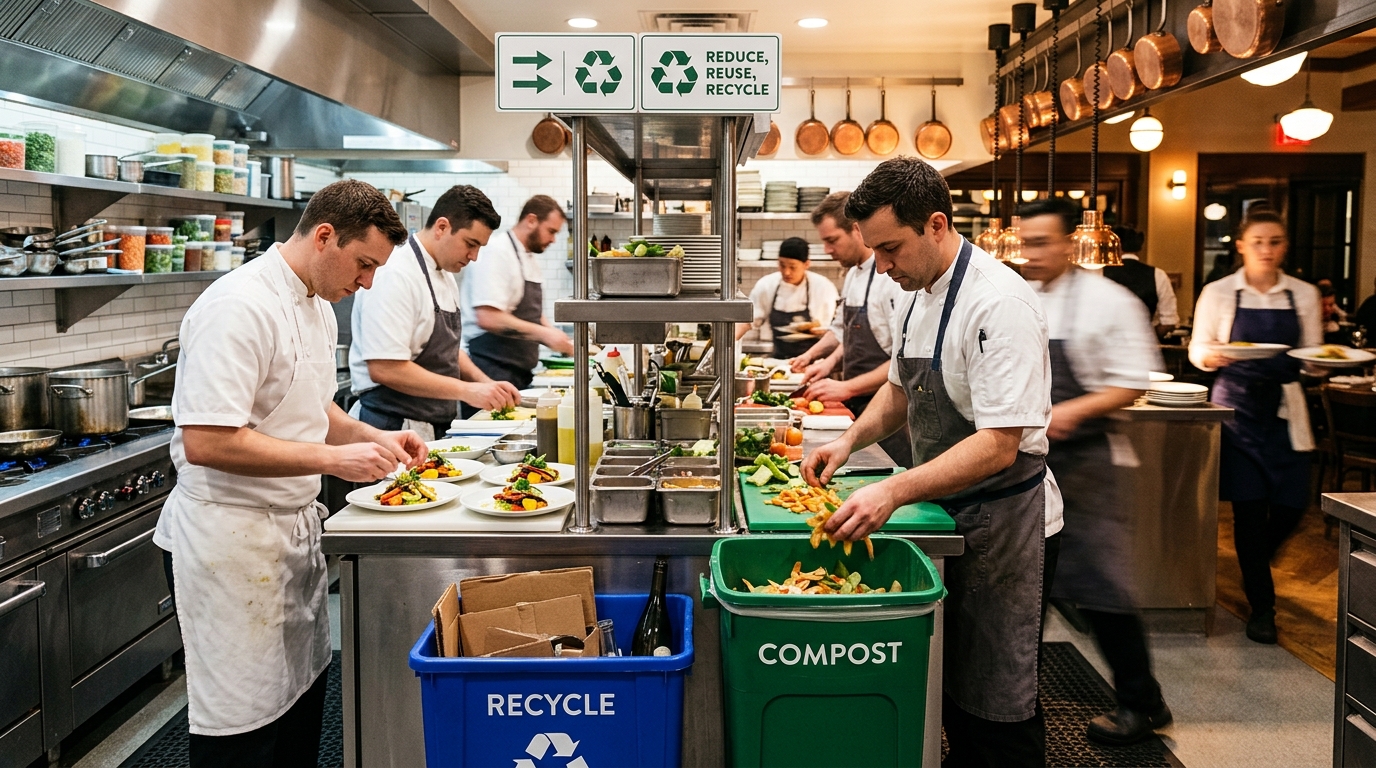
How To Reduce Restaurant Waste Without Slowing Down Service
Learning how to reduce restaurant waste starts with making back-of-house routines easier, not harder. Food scraps, takeout packaging, cardboard, and landfill trash all need a place that makes sense during a busy shift. At Bay Area Trash Compactor, we help restaurants keep waste out of landfills while making daily operations run better.
A packed lunch rush leaves little room for complicated sorting rules. Staff need stations that are easy to find and equipment that keeps up. When the setup works, waste stays under control without stealing attention from guests.
How To Reduce Restaurant Waste During Busy Shifts
The best way to reduce restaurant waste is to make disposal simple at the moment waste is created. Prep staff, line cooks, servers, and dish crews need containers close to where they work. Long walks to a waste station often lead to mixed materials or overloaded trash cans.
A kitchen crew moves at a fast pace during service. Nobody has time to stop and figure out which faraway bin takes a wet prep scrap. Good placement helps employees make the right decision without interrupting the flow of work.
Start by watching the kitchen during a normal shift. Look for overflowing cans, cardboard stacked beside doors, and trash bags sitting on the floor. These are not signs of a bad team, they are signs that the waste layout needs attention.
How to reduce restaurant waste often comes down to moving containers closer to the work. A small organics bin near prep tables can reduce food scraps entering landfill trash. A cardboard collection area near receiving keeps boxes out of the kitchen.
Waste stations should fit the way the restaurant operates. A busy drive-thru may need a different setup than a full-service dining room. The system should support the daily rhythm instead of creating extra steps.
Start With The Back Of House
A well-organized back of house gives staff an easier way to manage waste. The goal is to keep materials moving without creating clutter near food preparation areas. A few practical changes can make the whole operation feel less chaotic.
Waste starts in more places than the dumpster enclosure. It begins at the delivery door, in the prep area, near the dish station, and around takeout packing tables. Each of those spots creates a different kind of material.
Kitchen prep creates produce scraps, expired ingredients, and wet packaging. Dish areas generate leftovers, napkins, and disposable items. Delivery areas can fill with boxes faster than a team can flatten them.
How to reduce restaurant waste becomes easier when each material has a nearby destination. Keep organics containers close to food prep areas and place recycling near delivery zones. Landfill bins should be available where mixed trash is most common.
Clear labels also reduce confusion during a busy shift. Employees should be able to see where material belongs without stopping to read a long instruction sheet. A simple label with words and images can go a long way.
California businesses must participate in their local organics collection service or use an approved self-haul approach. Businesses also need organic-waste and recycling containers in areas where disposal containers are available for customers, except restrooms.
Local requirements can vary, so restaurant owners should confirm the rules with their city or waste provider. This is general operational information, not legal advice. We can help evaluate equipment that supports a cleaner waste process.
How To Reduce Restaurant Waste From Food Prep
Food prep waste can add up quickly in restaurants with steady kitchen volume. Vegetable trimmings, expired ingredients, and unserved food often create heavy bags by the end of a shift. Separating organics helps keep landfill trash from filling too early.
The easiest fix is often a small, labeled organics container near prep surfaces. Staff can place food scraps in the right bin while working through normal prep tasks. This keeps the process from feeling like another chore added to the station.
Train new employees using the materials they will see every day. Show them where produce scraps go and explain what should remain in landfill trash. A five-minute walkthrough can save plenty of confusion later.
How to reduce restaurant waste also means reducing spoilage before it reaches the bin. First-in, first-out inventory habits can help staff use ingredients before they expire. Smaller prep batches can also reduce the amount of food that gets discarded after slow periods.
Kitchen teams should track repeat waste patterns for one week. A regularly discarded side dish or ingredient may point to a purchasing issue. A little attention can uncover waste that has become part of the routine.
Food recovery can also help restaurants manage edible surplus. Local programs may connect qualifying businesses with organizations that distribute food to people in need. The material must still be safe and appropriate for donation.
Takeout Packaging Can Fill Bins Fast
Takeout packaging can create a large share of restaurant trash, especially during busy meal periods. Cups, containers, lids, napkins, and bags take up space long before they add much weight. That volume can make landfill bins fill faster than expected.
Restaurants can start by reviewing what leaves the counter with each order. Packaging should protect the meal without creating unnecessary layers. A small change to a takeout setup can reduce the amount of material entering the trash area.
Consider keeping utensils, napkins, and condiments available by request when it fits your service model. Many customers do not need extra items with every order. This can reduce the stream of unused material that returns in the trash.
How to reduce restaurant waste from takeout also depends on staff habits. Packing teams should use the right container size for each order. Oversized bags and extra packaging can add up across hundreds of transactions.
Restaurants should keep packaging materials separate when recycling options exist. Clean cardboard sleeves or certain containers may have a different path than food-soiled packaging. Local recycling rules should guide those decisions.
There is no need to make changes all at once. Start with the items that create the most volume behind the counter. Those small adjustments can make the waste area feel far more manageable.
Keep Cardboard From Taking Over
Cardboard becomes a problem when it has no defined place after deliveries. Boxes fill receiving areas, crowd walkways, and create extra work for employees. A simple cardboard routine can keep the back of house from turning into a box maze.
Restaurants receive boxes from food distributors, beverage companies, paper suppliers, and maintenance vendors. Even a smaller operation can see dozens of boxes in one delivery. During busy weeks, that pile grows fast.
Place a cardboard station close to the receiving area. Staff can break down boxes as shipments are shelved instead of stacking them for later. This keeps boxes from drifting into kitchen paths or storage rooms.
How to reduce restaurant waste includes keeping cardboard out of landfill containers. Cardboard takes up a great deal of space and can crowd out regular trash. Separating it gives the trash compactor more room for materials that cannot be recycled.
High-volume restaurants may benefit from a cardboard baler. A baler compresses boxes into dense bales that are easier to store for recycling collection. It also reduces the time employees spend flattening boxes by hand.
Our equipment service team helps restaurants keep waste and recycling equipment operating when it matters. A broken baler or compactor can turn a neat system into a back-of-house mess. Regular attention helps keep the material moving.
Use Organics Collection Without Creating Confusion
Organics collection works best when containers are placed where food waste is created. A restaurant can reduce contamination by giving staff a direct, visible disposal option. The less hunting employees need to do, the better the system will work.
California’s organics rules require businesses to provide adequate containers with correct labels or colors. Businesses must also educate employees, contractors, tenants, and customers about sorting when applicable. Staff should understand what belongs in each container and why it matters.
Keep labels short and specific. A sign that says “Food Scraps And Organics Only” can be easier to understand than a long paragraph. Photos of common kitchen materials can help during the first few weeks.
How to reduce restaurant waste through organics collection also means checking bins for contamination. A quick inspection before collection can catch plastic wrap or other items in the wrong container. Small corrections help maintain a cleaner organics stream.
Assign one team member per shift to flag problems during the early rollout. This does not need to become a formal inspection program. A quick glance can help staff learn the routine faster.
Food scraps can be wet and heavy, so the collection area needs regular cleaning. Keep containers closed when possible and clean spills quickly. This helps control odors and keeps pests from becoming unwanted regulars.
Keep Landfill Bins From Filling Too Early
Landfill bins fill early when recyclable and organic material gets tossed in with trash. Loose bags, cardboard, and packaging also create empty space that costs money to haul. A trash compactor can help restaurants manage that remaining waste more efficiently.
A compactor reduces the volume of bagged landfill trash before pickup. It stores material in a dense load, which can reduce the need for frequent collection. This keeps waste areas more contained during busy periods.
How to reduce restaurant waste through compaction begins with separating the right materials first. Cardboard belongs in recycling, while food scraps may belong in organics collection. The trash compactor then handles the material that truly needs landfill disposal.
Restaurants that handle wet food waste should consider self-contained compactor equipment. These systems help keep liquids inside the container during compaction and hauling. That can help reduce leaks around the enclosure.
Our maintenance program helps restaurants keep compactors reliable through daily use. Waste equipment takes a beating in a busy food-service setting. Planned maintenance helps avoid unexpected downtime during a full week.
A properly sized system can also make pickup schedules more efficient. When restaurants compact waste, they can often hold more material before the hauler arrives. Less overflow means fewer emergency calls and less stress for managers.
Make The Routine Easier For Employees
Staff routines determine how well a restaurant waste plan works. Equipment can help, but employees need a process that fits naturally into their work. If a waste station feels inconvenient, people will work around it.
Keep training brief and practical. Show new hires the waste stations during their first shift. Explain the few materials that create the most confusion, then let the routine do the rest.
How to reduce restaurant waste gets easier when employees can see the impact. Share simple updates, such as fewer overflowing bins or more room near the delivery door. People respond better when they know their effort solves a real problem.
Managers can also ask staff for feedback about the setup. A dish team may know that a container needs to move closer. A delivery worker may point out that cardboard piles up before they can reach the recycling area.
Waste systems should be adjusted as restaurant operations change. New menu items, bigger delivery volume, or a remodeled kitchen can change what the business throws away. A plan that worked last year may need a few updates.
Our news section shares practical information about waste equipment and commercial waste practices. It can help restaurant owners stay informed without getting lost in industry jargon. A better routine can start with one useful idea.
A Better Back Of House Flow
A better waste flow keeps the kitchen moving while reducing cleanup and hauling pressure. Separate materials where they are created, then move them toward the right equipment. This approach makes the back of house feel more organized during the rush.
Restaurants do not need a complicated program to make progress. They need sensible container placement, basic staff training, and equipment that fits their actual waste volume. Those pieces work together to keep bins from filling before their time.
How to reduce restaurant waste also supports a cleaner property. Less overflow near the enclosure can reduce odor concerns and keep the area easier to maintain. It gives staff a little more breathing room at the end of a long shift.
We work with restaurants across Northern and Southern California to assess waste flow. Every kitchen has different space limits and service patterns. Our recommendations are based on what happens at the property each day.
FAQs
Put Your Waste Flow To Work
A better waste setup can keep your kitchen moving and help landfill bins last longer. Contact Bay Area Trash Compactor to request a waste-flow assessment, or call us at (925) 465-5133.