
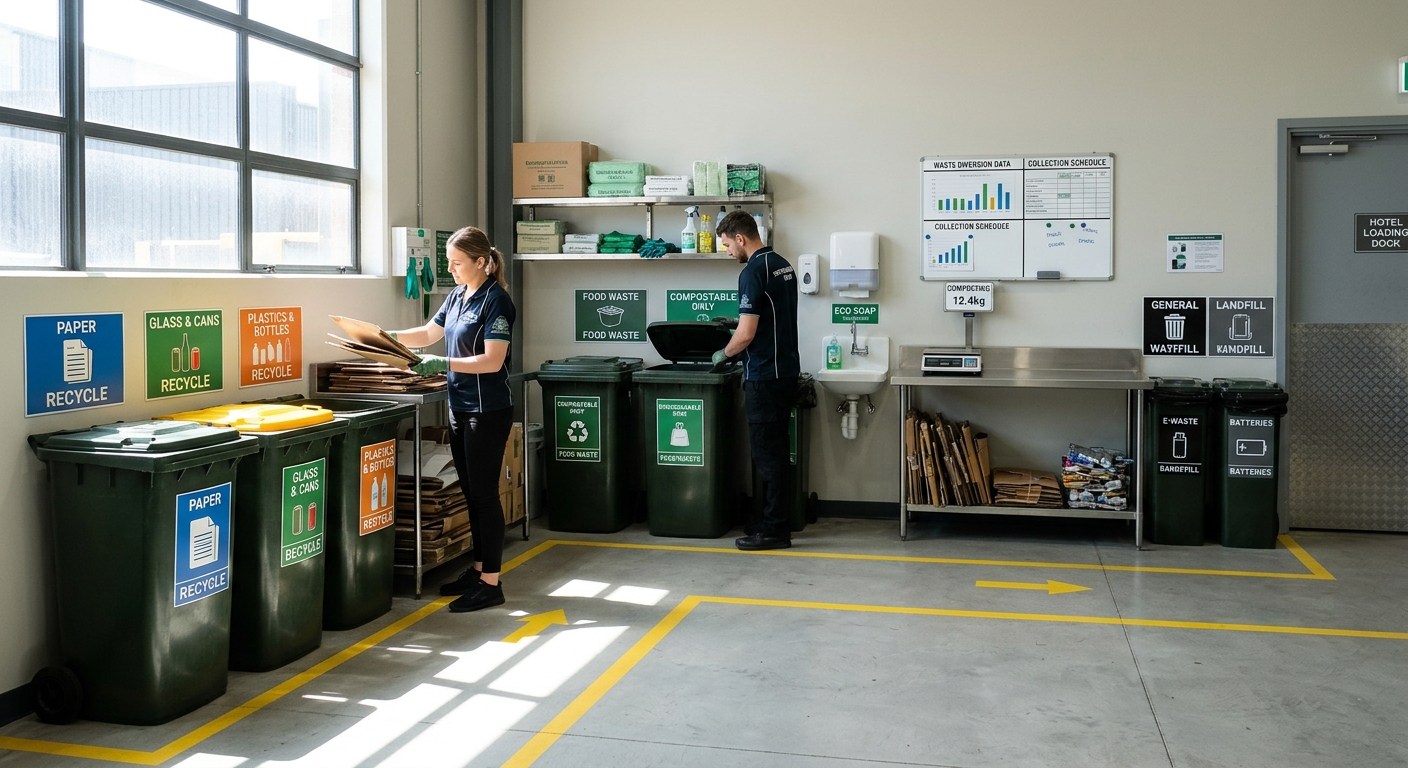
Hotel Waste Management That Protects Your Property And Guest Experience
Hotel waste management connects what happens behind the scenes with the experience guests enjoy throughout their stay. Housekeeping bags and kitchen scraps need dependable disposal routes that keep service areas from becoming crowded. At Bay Area Trash Compactor, we help keep waste out of landfills while making hospitality operations run more efficiently.
Hotel Waste Management Begins With Daily Operations
A practical hotel waste management plan follows how employees work throughout the property, especially during busy turnover periods. Equipment should support those routines without forcing staff to take longer routes or handle the same material repeatedly.
Housekeepers often finish several rooms within a short window before afternoon arrivals. Meanwhile, receiving teams unpack deliveries while kitchen employees prepare for another meal service.
Those activities can send waste toward the same service area at once. Containers that worked during a quiet weekday may struggle after a sold-out weekend.
We begin by understanding these patterns before discussing a compactor or baler. A useful recommendation starts with the material your employees handle and the space they have available.
Look Beyond The Monthly Hauling Invoice
Hotel waste management costs include employee time spent carrying bags or dealing with containers that fill too early. The hauling invoice captures only part of what your current system costs.
Consider a receiving employee who repeatedly moves cardboard to make room for deliveries. Those minutes accumulate while other responsibilities wait, particularly when boxes arrive throughout the day.
Housekeeping teams can face similar delays when their disposal point remains crowded. A longer walk around stored waste adds unnecessary handling during an already demanding shift.
Record these interruptions alongside collection charges when reviewing your existing arrangement. That broader picture helps identify improvements that matter to both your budget and employees.
The goal is a dependable routine that reduces avoidable handling across departments. Staff should have enough space to complete their work without rearranging yesterday’s packaging first.
Separate Waste According To Where It Starts
Effective hotel waste management gives each department an appropriate route for its discarded materials. Housekeeping waste requires different handling from clean delivery cardboard or food scraps.
Room-service packaging may contain leftover food that needs separation before disposal. Bathroom waste requires its designated handling route, while accepted beverage containers belong in the appropriate recycling stream.
Receiving areas generate cardboard that can remain useful when protected from contamination. Kitchen teams need accessible organics containers that match their collection provider’s accepted materials.
Place disposal stations close enough to support the task employees already perform. A distant container encourages shortcuts when someone has a cart full of supplies waiting nearby.
Labels should use examples employees encounter during their normal workday. Pictures can help explain the difference between accepted recyclables and packaging that belongs elsewhere.
Match Capacity To Occupancy And Events
Hotel waste management equipment should account for busy operating periods rather than average occupancy alone. A ballroom event can change disposal needs even when room bookings remain steady.
Track waste output through a representative period that includes higher-demand days. Compare container fullness before collection and note when staff begin storing bags outside designated areas.
An events calendar adds useful context when evaluating those observations with management. A conference may increase packaging waste, while a catered celebration can produce heavier food-related material.
Capacity planning should allow employees to manage these predictable increases without unsafe storage. Extra room must still fit within available space and the hauler’s acceptable loading limits.
We use actual operating patterns when discussing equipment options with hospitality teams. A property review helps explain capacity needs more accurately than room count alone.
Use Compaction For Remaining Landfill Trash
A compactor can support hotel waste management by reducing the space approved landfill trash occupies before collection. This can improve storage efficiency when loose bags fill containers quickly.
Equipment selection depends on waste characteristics and the disposal arrangement serving the property. Moisture-heavy refuse requires attention to liquid containment alongside the amount generated each day.
A self-contained compactor can help contain liquids during compaction and transport. Other configurations may fit properties handling drier waste or using a different collection process.
Your hauler needs to confirm compatibility before equipment decisions become final. A container that fits the enclosure still needs accessible collection using the provider’s equipment.
Compaction does not replace material separation required by local collection programs. Food scraps should follow the appropriate organics route rather than entering landfill trash because space becomes available.
Give Cardboard Its Own Receiving Routine
Cardboard belongs in a separate hotel waste management plan because deliveries can overwhelm receiving areas between recycling collections. Boxes need a designated destination as employees unpack incoming supplies.
For a lower-volume property, organized recycling storage may provide sufficient capacity. Larger hotels can evaluate a baler when loose boxes create persistent clutter or repeated manual handling.
A baler compresses suitable cardboard into secured bundles for recycling collection. Before installation, confirm what your recycling partner accepts and how completed bales will leave the property.
Employees also need enough room to load equipment and move finished material safely. A machine cannot solve a space problem if its operating area blocks the receiving route.
Keep cardboard protected from food contamination and unnecessary exposure to moisture. Clean material is easier to manage through a recycling program than boxes mixed into general trash.
Keep Kitchen Organics Away From Guest Areas
Food scraps require particular attention in hotel waste management because kitchen output can change sharply around events. Storage and collection routines must keep pace with those predictable increases.
Start with collection containers near food preparation areas and dish-return stations. Employees should be able to separate scraps without carrying them across a busy kitchen.
Local program instructions should guide what enters the organics container each shift. Packaging that appears compostable still needs confirmation from the receiving program before staff include it.
Onsite processing equipment requires a plan for its output before installation. Removing moisture from food waste does not automatically make the remaining material acceptable for landfill disposal.
Coordinate storage locations with the kitchen team and property engineering staff. A convenient loading route should also protect nearby guest spaces from avoidable odors and cleanup problems.
Plan Collection Around Property Traffic
Collection scheduling matters in hotel waste management because truck activity can overlap with guest arrivals or breakfast service. A better pickup window can reduce conflicts around shared access points.
Review where trucks enter and how collection affects surrounding activity onsite. Loading areas sometimes serve delivery vehicles while employees move carts through the same limited space.
Discuss possible service windows with your hauler before making assumptions about availability. Route restrictions or local requirements may limit the timing a provider can offer.
Compaction can support fewer collections when capacity and sanitation conditions allow. Any proposed reduction should account for peak occupancy rather than relying on quieter weeks.
Clear access remains essential between visits, even when collection becomes less frequent. Stored furnishings or parked vehicles should never turn the container approach into an obstacle course.
Protect Improvements With Scheduled Service
Maintenance keeps hotel waste management equipment available during the periods when employees need it most. An unexpected shutdown can leave departments improvising storage arrangements during a full-property weekend.
Follow manufacturer instructions for cleaning and have qualified technicians inspect working components. Employees should report unusual operation rather than relying on repeated resets to finish another load.
Our maintenance program helps properties plan care around their equipment’s actual workload. Scheduled attention provides opportunities to identify wear before it causes a larger interruption.
Our equipment service also supports systems that begin showing performance problems. Accurate reports from employees help explain when an issue started and what changed.
Never ask staff to reach into machinery or bypass a safety device. Qualified personnel must follow applicable isolation procedures before work exposes anyone to hazardous movement.
Learn From A Pleasanton Hotel Installation
A documented installation shows how hotel waste management changes can address operational problems alongside hauling expenses. At AC Marriott Pleasanton, our work included relocating equipment away from the swimming pool.
We installed an SV2 Compactor for housekeeping and kitchen waste at the property. Our team also installed an M42BC baler near receiving to handle delivery cardboard.
The published case study reports a 55 percent reduction in the previous trash bill. It also reports approximately $9,000 in annual labor savings following the equipment changes.
Those figures describe that property’s results rather than a guaranteed return elsewhere. Another hotel needs its own review of current charges and available equipment space.
The useful lesson is how the project connected disposal equipment with daily workflow. Location mattered alongside capacity because the existing arrangement affected the area near the pool.
Measure Results Your Team Can Use
Hotel waste management reporting should connect improvements with operating conditions rather than tracking invoices alone. Monthly spending becomes more meaningful when compared with occupancy and event activity.
Record collection frequency alongside charges so management can explain changes over time. A higher-volume month may increase costs even when the underlying process has improved.
Ask department supervisors about recurring overflow or unnecessary handling after equipment changes. Employee feedback can reveal problems that a monthly expense report will never show.
Our news section provides additional information about commercial waste equipment and material handling. Properties can use these resources when discussing possible changes with their internal teams.
FAQs
Make More Room For Hospitality
Contact Bay Area Trash Compactor to discuss hotel waste management equipment suited to your daily operations. Call (925) 465-5133 to request a property review based on your actual waste flow.