
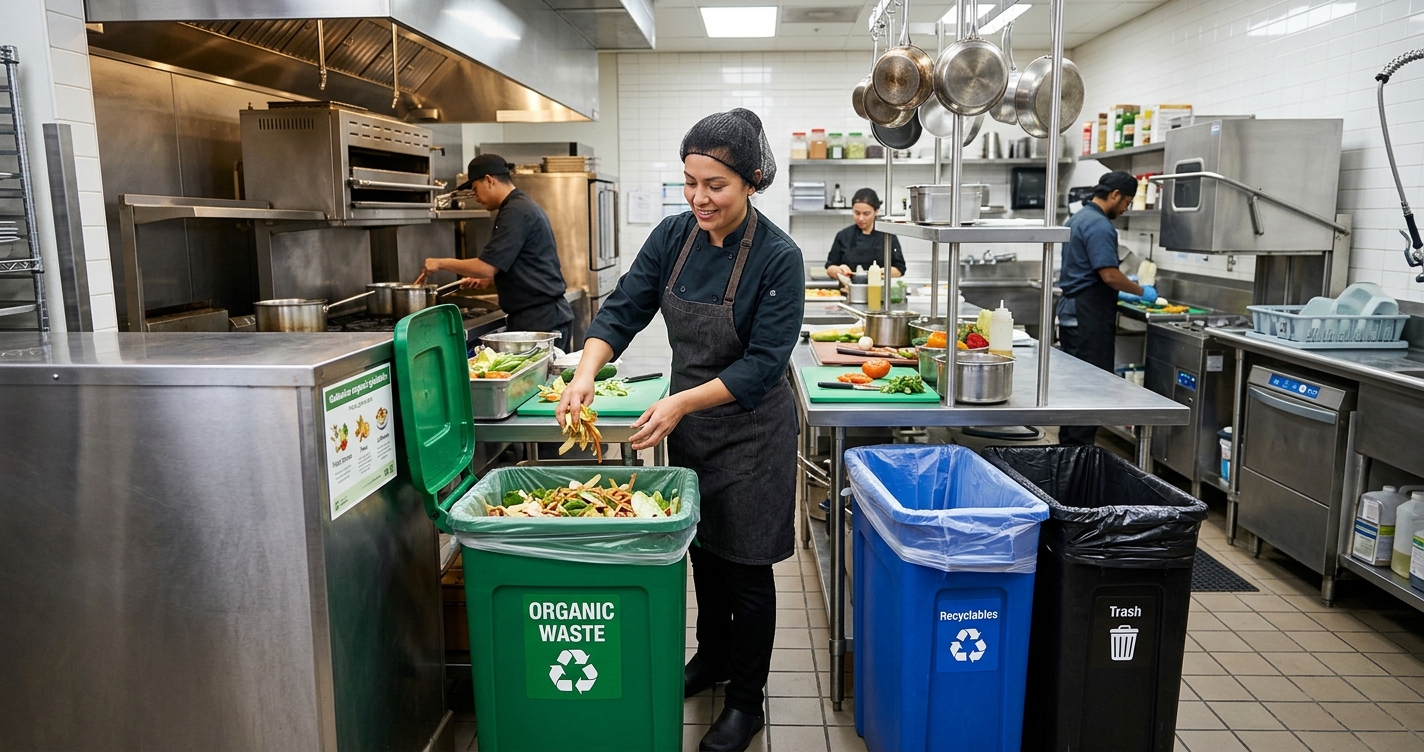
SB 1383 For Restaurants What Food Waste Rules Mean For Your Back Of House
SB 1383 restaurant requirements affect how California food-service businesses handle organics, landfill trash, and edible surplus. Restaurants need practical waste routines that support cleaner sorting without slowing down kitchen work. At Bay Area Trash Compactor, we help restaurants keep waste out of landfills while making busy operations run better.
Food waste does not wait for a quiet moment to pile up. Prep scraps, spoiled ingredients, and banquet leftovers can create a messy back-of-house problem quickly. A workable system helps staff manage those materials without turning every shift into a sorting lesson.
SB 1383 Restaurant Requirements In Plain Language
SB 1383 restaurant requirements focus on keeping organic waste out of California landfills. The state requires local jurisdictions to provide organic waste collection service to residents and businesses. Certain businesses may qualify for exemptions, waivers, or approved self-haul arrangements through local programs.
For restaurant operators, the main task is separating food scraps from ordinary landfill trash. Organics collection can include food waste, food-soiled paper, and other accepted materials. The exact materials accepted can vary based on the local collection program.
Local rules matter because each city or county manages implementation in its own way. Restaurant owners should confirm container rules and collection requirements with their local jurisdiction. This article offers general information and does not provide legal advice.
SB 1383 restaurant requirements can sound complicated at first, though the daily routine should stay simple. Staff need containers placed near the places where food waste is created. They also need labels that make sense during a busy shift.
CalRecycle states that local jurisdictions must provide organic-waste collection service to businesses. A business may use a qualifying waiver, exemption, or self-haul framework when available through local programs.
The goal is not to make employees memorize a long list of rules. The goal is to keep food scraps and other organics from ending up in landfill containers. Good station placement can make that process much easier.
Start With Your Organics Collection Setup
A restaurant needs accessible organics containers before staff can sort food waste properly. Put the containers close to prep tables, dish areas, and kitchen exits where waste is created. Long walks to disposal stations can lead to mixed materials during a rush.
Small containers at prep areas can collect vegetable trimmings and food scraps. Larger carts or bins can sit near the kitchen exit for bagged organics. This gives employees a practical route from food preparation to final collection.
SB 1383 restaurant requirements work better when containers match the restaurant’s workflow. A small café may use one organics cart near the kitchen. A large dining operation may need multiple stations across prep, dish, and banquet areas.
Labels should be easy to read from a few feet away. Use simple language, recognizable images, and colors that match local program guidelines. A busy employee should not need to stop and study a complicated sign.
Keep organics containers covered when possible. Food scraps can create odors and attract pests when left exposed. Regular cleaning helps keep the area sanitary and easier for employees to use.
Food waste separation can also reduce the amount of material entering landfill trash bins. That gives standard trash containers more room for items that cannot be recycled or composted. It can also make pickup schedules easier to manage.
Container Placement Makes Or Breaks The Routine
Container placement has a direct impact on how well a restaurant handles organics. Staff will use the nearest reasonable option when the kitchen gets busy. The right bin in the wrong location can sit empty while landfill trash fills up.
Start by watching where food waste appears during a normal service period. Prep stations, dish areas, bar service, and food storage rooms can each create different materials. The container layout should reflect those patterns.
SB 1383 restaurant requirements do not need to create extra steps for staff. A compost container near the prep sink can catch scraps before they hit the landfill bin. A second station near dishwashing can handle plate waste and food-soiled paper.
Consider the path staff use when taking bags to the back of house. Organics bins should be available along that route without blocking walkways. The system needs to work even when delivery carts and food deliveries are moving nearby.
Restaurants with outdoor waste enclosures should keep containers accessible and protected. Overflow, leaks, and loose bags can create a sanitation problem near the building. A well-organized enclosure keeps the waste area easier to maintain.
Our equipment service team helps restaurants keep waste-handling equipment operating under demanding conditions. Reliable equipment supports better waste routines when kitchens are handling high volumes. A broken compactor or dehydrator can disrupt even a well-planned process.
Managing Food Recovery
Food recovery focuses on edible surplus that can be donated instead of discarded. It applies to certain larger food-service businesses under California’s SB 1383 framework. Restaurants should separate safe, edible food from scraps that belong in organics collection.
SB 1383 restaurant requirements include food recovery obligations for some larger restaurants. CalRecycle lists restaurants with at least 5,000 square feet or 250 or more seats as mandated food donors. These businesses must establish agreements with food recovery organizations or services and maintain required donation records.
A food recovery plan should begin with food that remains safe for people to eat. Prepared surplus may be appropriate for donation when it has been stored and handled correctly. Food scraps, spoiled ingredients, and plate waste belong in the organics stream instead.
Restaurant managers can work with local food recovery organizations or recovery services. These groups can collect eligible food and distribute it through food banks, pantries, or other community programs. Local jurisdictions often provide information about available programs.
Keep the recovery process separate from the waste process. Employees need to understand where donation-ready food goes and where organics go. Clear procedures help avoid confusion during fast-paced service periods.
A good food recovery system can support the community while reducing the restaurant’s edible-food waste. It also gives owners a stronger understanding of what is being discarded. That knowledge can reveal purchasing or preparation habits worth reviewing.
Reducing Contamination In Organics Bins
Contamination happens when materials that do not belong enter organics containers. Plastic wrap, utensils, foil, and packaging can complicate processing at collection facilities. A few practical habits can help restaurants keep organics cleaner.
Start with the materials that staff often get wrong. Plastic film from food deliveries and condiment packets are common troublemakers. Show employees where those items should go during orientation and refresher training.
SB 1383 restaurant requirements are easier to follow when signs use examples from the actual kitchen. A label showing food scraps, coffee grounds, and food-soiled paper can be helpful. A separate label can show plastic packaging and utensils as landfill items.
Checking containers before pickup can also help reduce contamination. A quick look takes little time and catches obvious problems. This does not need to feel like a formal inspection or a disciplinary task.
Assigning one person to review the waste area at the end of a shift can help. That person can flag full bins, missing labels, or frequent sorting mistakes. Small corrections can keep the process from drifting off track.
Keep containers clean enough that employees do not avoid using them. A dirty, overflowing organics bin will not encourage good habits. Regular washing and liner replacement help keep the station workable.
Equipment That Supports A Cleaner System
The right equipment can make organics handling easier for restaurants with steady food waste. Food composters, dehydrators, and sealed compactors each serve different needs. We help restaurant owners match equipment to their kitchen volume and layout.
A food composter processes food scraps into material that is easier to manage. It can be useful for restaurants that want an onsite approach to organics. The best fit depends on the waste stream and available space.
Our food composters can support restaurants looking to handle food scraps more efficiently. We review the materials entering the system before recommending equipment. Good planning helps avoid equipment that does not suit the kitchen.
Food waste dehydrators remove moisture from organics to reduce their volume and weight. This can reduce the amount of wet material stored in collection containers. It may also help limit odor concerns in tight back-of-house areas.
A food waste dehydrator can process a wide range of daily food-waste volumes, depending on the equipment model. Capacity, operating speed, and maintenance needs should all fit the restaurant’s routine. The right equipment can keep waste moving without slowing staff down.
Some restaurants may need a self-contained compactor for wet landfill waste. These units help keep liquids inside during compaction and hauling. This can support cleaner disposal areas when food residue makes up a large share of the trash stream.
Keeping The Back Of House Cleaner
A clean back of house supports food safety, staff morale, and daily efficiency. Overflowing bags or leaking containers can create issues that spread beyond the waste area. Better organics handling helps control the mess before it reaches the loading dock.
SB 1383 restaurant requirements can also support a more organized waste enclosure. When food scraps, cardboard, and landfill trash have separate paths, containers fill more predictably. Staff spend less time guessing where material belongs.
A restaurant’s waste system should work during a quiet afternoon and a packed weekend. Equipment that is too small or poorly placed can create bottlenecks. We look at peak waste periods when assessing a property.
Maintenance also keeps waste equipment ready for daily use. Moisture-heavy waste can place extra strain on seals, hydraulic components, and loading areas. Planned service helps keep compactors and food-waste equipment running reliably.
Our maintenance program gives restaurant teams support for equipment that works hard every day. Regular service helps us catch wear before it causes a disruption. It also gives managers more confidence in the waste setup.
A cleaner back-of-house system can reduce odors near kitchens and outdoor areas. It can also reduce the time staff spend handling overflow. Waste might not be glamorous, though it should not run the show.
Training Staff Without Overloading Them
Staff training should be short, practical, and tied to real kitchen routines. A long policy document rarely helps during a busy dinner shift. Show employees the containers, explain the main materials, and answer common questions.
New employees should learn waste stations during their first day. This helps establish the right habits before shortcuts become routine. A quick walkthrough can cover the basics without taking much time.
SB 1383 restaurant requirements should be explained in everyday language. Tell staff that food scraps go in organics and plastic packaging does not. Use simple examples from the restaurant’s own ingredients and supplies.
Managers can also post a brief reminder near waste stations. A few images can be more useful than a paragraph of text. The goal is to help employees make quick decisions without hesitation.
Refresher training can happen when the restaurant sees contamination problems. It can also help after menu changes or during periods of high seasonal hiring. A short reminder is often enough to get the routine back on track.
Our news section includes useful information about commercial waste equipment and management practices. Owners can use these resources to support their own training conversations. Practical information works best when it is easy to apply.
FAQs
Give Food Waste A Better Path
A practical organics setup can make SB 1383 routines easier for your kitchen team. Contact Bay Area Trash Compactor to discuss composting or food-waste equipment that fits your restaurant’s layout.